Window vs Aisle: Choose the Best Plane Seat
Window vs aisle on a plane? Choose window for sleep and views, or aisle for easy bathroom breaks and faster exits. Pick your flight side
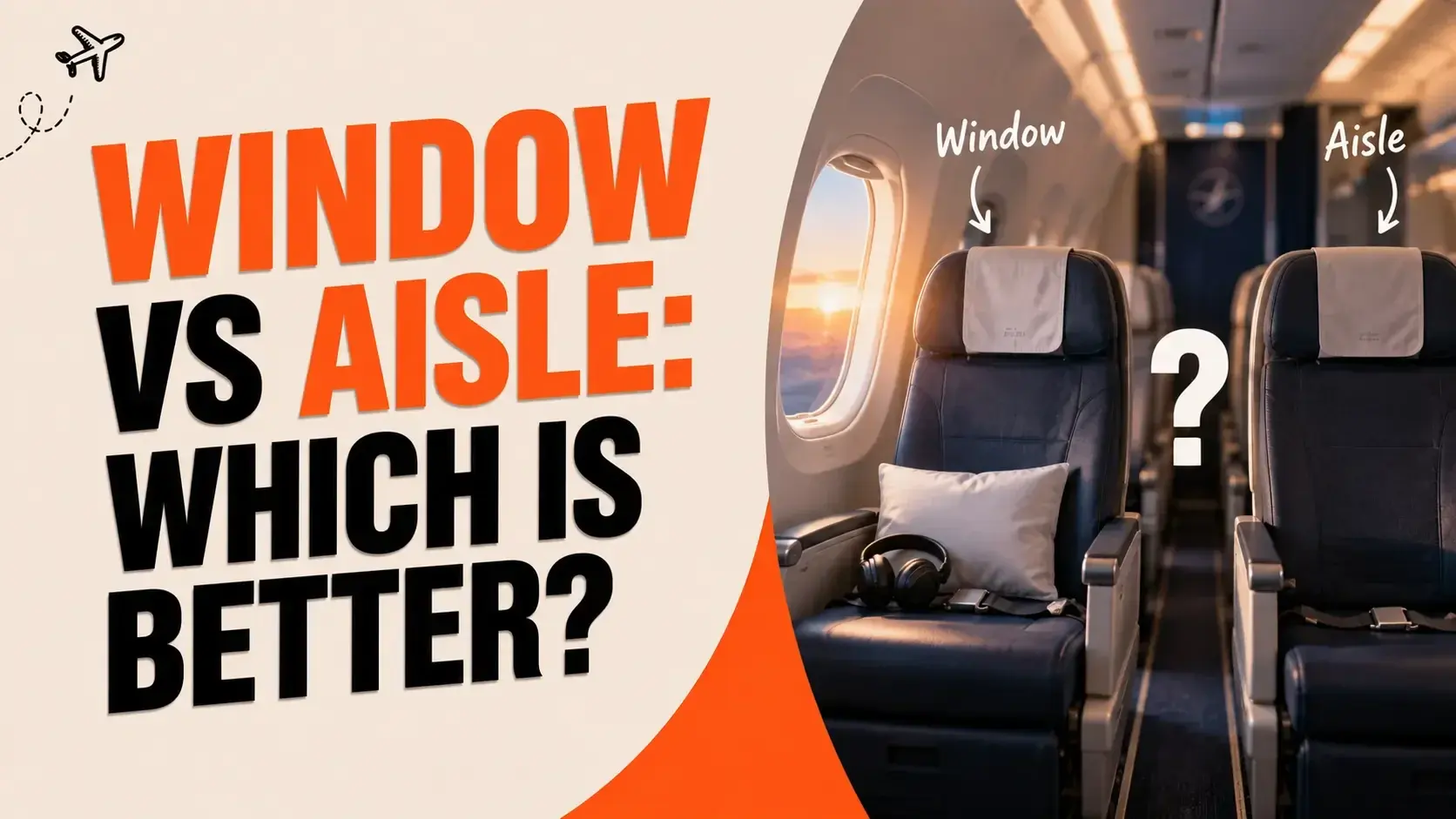

Window vs Aisle: Which Plane Seat Is Better for Your Flight?
The window vs aisle decision comes down to what will affect your comfort most during the flight.
- Best For Sleep: Choose a window seat if you want a wall to lean against, fewer interruptions, and a view.
- Best For Movement: Choose an aisle seat if you expect bathroom breaks, want to stretch, or need quick access to your bag.
- Check First: Review the aircraft seat map for recline limits, galley traffic, lavatories, window alignment, and cabin layout.
- Direct Answer: A window is usually better for sleeping. An aisle is usually better for convenience.
Introduction
A window or aisle seat can change your flight more than many travelers expect. You may want uninterrupted rest, easy bathroom access, a view, or room to stand without asking someone to move. Is window better than aisle for your trip, or will the aisle be more practical once you are onboard?
The best choice depends on your flight duration, seatmate situation, cabin layout, and personal space needs. In this guide, you will learn how to make a window vs aisle decision based on the aircraft seat, not just the seat letter.
What Does Window vs Aisle Mean for Your Plane Seat?
A window seat sits beside the aircraft wall, while an aisle seat sits beside the cabin walkway. Both can be comfortable, but they create different tradeoffs once boarding, meal service, restroom breaks, and sleeping begin.
Use this quick comparison before selecting an airline seat.
| Travel Factor | Window Seat | Aisle Seat | Better Choice For |
|---|---|---|---|
| Sleep | Wall support and fewer interruptions | More disruptions from seatmates and crew | Sleeping |
| Restroom access | Requires asking others to move | Easy access at any time | Frequent breaks |
| Views | Direct access to the view | Usually limited view | Scenery |
| Cabin traffic | Less exposure to passing people | More exposure to carts and passengers | Quiet travel |
| Deplaning | May require waiting for others | Easier access to the aisle | Tight connections |
| Stretching | Limited without leaving the row | Easier to stand and move | Long flights |
What Are the Main Benefits and Drawbacks of a Window Seat?
A window seat can feel more private because you have a wall on one side and only one passenger beside you. It often works best when staying seated matters more than getting up.
Consider a window seat if the following points fit your trip:
- Best For Sleep: You can lean against the aircraft wall instead of trying to rest upright.
- Best For Views: You can watch takeoff, landing, and scenery without asking another passenger to raise the window shade.
- Best For Fewer Interruptions: Other passengers are less likely to pass beside you during the flight.
- Limitation: Restroom Access: You may need to ask one or two seatmates to move before leaving your row.
- Limitation: Limited Movement: Stretching can feel restrictive, especially on a long-haul flight.
What Are the Main Benefits and Drawbacks of an Aisle Seat?
An aisle seat gives you direct access to the cabin walkway. It can be the better airline seat when you value freedom of movement more than uninterrupted personal space.
An aisle seat may suit you in these situations:
- Best For Bathroom Breaks: You can stand up without disturbing other passengers.
- Best For Stretching: You can move your legs, walk to the lavatory, and adjust your position more easily.
- Best For Overhead-Bin Access: You can reach your carry-on bag with less disruption to the row.
- Limitation: Aisle Traffic: Passengers, cabin crew, and service carts can pass close to your shoulder.
- Limitation: Seatmate Disturbance: A window or middle-seat passenger may need you to move several times.
Is Window Better Than Aisle for Sleep, Comfort, and Movement?
Window vs aisle is not only about a view or an easy exit. Your flight timing, personal space needs, and tolerance for cabin activity can make one seat much more suitable than the other.
Use the factors below to match the seat to your travel needs.
Is a Window or Aisle Seat Better for Sleeping?
A window seat is usually the better choice for sleeping on a plane. The aircraft wall offers support for your head, and you are less likely to wake up because another passenger needs to leave the row.
Before selecting a window seat for a red-eye flight, check these details:
- Seat Recline: Confirm whether the row has normal recline or limited recline near a cabin wall or exit row.
- Window Alignment: Some aircraft seats have a partial, misaligned, or missing window.
- Cabin Noise: Avoid seats close to a galley, lavatory, or crew work area when quiet matters.
- Sunlight Exposure: A window shade can reduce light, but cabin lighting and the flight direction may still affect rest.
- Seat Width: A narrow seat or fixed armrest can reduce comfort even when the window position is ideal.
For overnight travel, use a red-eye seat picker alongside the airline seat map to compare sleep-related seat details.
Which Plane Seat Is Better for Bathroom Breaks and Stretching?
An aisle seat is usually better if you expect to use the lavatory often or need regular movement. This matters more on international flights, long-haul travel, and flights where you may feel uncomfortable staying seated for long periods.
An aisle seat can be a practical choice for:
- Older Travelers: You can move without climbing over other passengers.
- Travelers With Mobility Needs: You have easier access to the cabin aisle, although airline accessibility arrangements should be confirmed directly.
- Pregnant Travelers: Frequent restroom access can make an aisle seat more comfortable.
- Tall or Larger Passengers: Standing and adjusting your position can feel easier, even when legroom is limited.
- Frequent Flyers: You can retrieve needed items and prepare for deplaning more easily.
Aisle access does not guarantee more space. Check the seat pitch and width with a legroom calculator and seat width comparison tool.
Does an Aisle or Window Seat Feel More Private?
A window seat usually feels more private because fewer people pass beside you. An aisle seat can feel more open, but you may be exposed to cabin crew movement, meal service, and passengers walking to the lavatory.
Your preferred type of privacy may determine the better seat:
- Window Privacy: Better if you prefer a contained space, less foot traffic, and control over the window shade.
- Aisle Freedom: Better if you dislike feeling blocked in or want to leave your seat without asking permission.
- Middle Seat Effect: The middle passenger may affect both options, especially during meal service or overnight flights.
Which Window or Aisle Seat Works Best for Your Flight Type?
Your flight duration and departure time should guide the window vs aisle choice. A short domestic flight may make easy deplaning more valuable, while an overnight international flight can make sleep the main concern.
Match your seat preference to the trip ahead.
Short Daytime Flights
On short-haul travel, an aisle seat can be useful if you have a tight connection or want quick access after landing. A window seat still works well when you value views and do not expect to leave your row.
- Choose Window: If you want a view and expect to remain seated.
- Choose Aisle: If you have a short connection or prefer quicker movement.
- Check Row Position: A forward seat can matter more than window versus aisle when time is limited.
Long-Haul Flights
Long flights make the window or aisle seat decision more personal. You may sleep better at the window, but an aisle seat can reduce discomfort if you need frequent movement.
- Choose Window: If uninterrupted rest is your top priority.
- Choose Aisle: If restroom breaks and stretching matter more than sleep support.
- Check Cabin Layout: Review galleys, lavatories, bulkhead rows, exit rows, and seatmate disturbance before paying.
Red-Eye and Overnight Flights
A window seat is often the stronger choice for an overnight flight because it reduces interruptions. However, it may not suit you if you expect regular bathroom breaks or dislike waiting for others to move.
- Choose Window: If you plan to sleep for most of the flight.
- Avoid Noisy Rows: Stay away from areas near lavatories, galleys, and high cabin crew movement.
- Confirm Recline: Restricted recline can make a window seat less useful for sleep.
Flights With Children, Companions, or Mobility Needs
When traveling with another person, a window and aisle seat with the middle seat between you can provide flexibility if the flight is not full. Families may prefer a window seat for a child to reduce exposure to aisle traffic.
- For Families: Keep children away from the aisle where possible.
- For Companions: Use window and aisle seats strategically when seat availability allows.
- For Caregivers: Prioritize aisle access if you may need to assist another traveler during the flight.
What Can Make a Window or Aisle Seat a Poor Choice?
The seat letter does not tell the full story. A window seat can have no usable window, and an aisle seat can sit beside a noisy lavatory or a busy galley.
Review the specific aircraft configuration before confirming your airline seat assignment.
Which Row-Level Details Should You Check Before Selecting a Seat?
A seat map may show available seats without showing every passenger comfort issue. Two window seats or two aisle seats can have very different limitations on the same aircraft.
Check these seat details before you pay:
- Restricted Recline: Seats near cabin walls, exits, or lavatories may not recline fully.
- Window Alignment: A window seat may have a partial or absent window because of aircraft structure.
- Exit-Row Rules: Exit-row seats may offer legroom but can have fixed armrests or limited under-seat storage during takeoff and landing.
- Bulkhead Limits: Bulkhead seats may have open knee space but fixed armrests and no floor storage.
- Galley And Lavatory Proximity: Nearby areas can bring light, noise, queues, and more aisle traffic.
- Bassinet Positions: These rows may experience more family activity and child-seat restrictions.
- Wing View: A wing view can reduce scenery, although it may be useful if you prefer a stable visual reference during turbulence.
Read airline seat maps explained before relying on the colors and symbols shown during seat selection.
Why Can an Aircraft Swap Change Your Seat Experience?
An aircraft swap can replace the scheduled aircraft with another model or cabin version. Your seat number may remain the same, but its window alignment, legroom, seat width, and nearby cabin features may change.
If the airline updates your flight, take these steps:
- Recheck The Seat Map: Review the updated cabin layout in the airline app.
- Compare The New Layout: Use SeatInfo seat maps to review the aircraft and cabin position.
- Check Your Row Again: Confirm recline, lavatory distance, galley location, and exit-row restrictions.
- Look For Alternatives: A similar seat may be available in a quieter or more comfortable row.
How Should You Choose Between a Window and Aisle Seat?
The best airplane seating preference begins with your main priority. Choose the seat that solves your biggest in-flight problem instead of following a universal rule.
Use this five-step selection process:
- Identify Your Flight Type: Consider whether you are taking a domestic flight, international flight, red-eye flight, or short daytime trip.
- Choose Your Main Priority: Decide whether sleep, views, restroom access, personal space, or fast deplaning matters most.
- Review The Aircraft Seat Map: Check the scheduled aircraft, cabin layout, and row position.
- Rule Out Poor Rows: Avoid restricted recline, heavy aisle traffic, missing windows, and seats beside galleys or lavatories when those factors matter.
- Recheck Before Departure: Confirm your assigned seat after any aircraft or airline seat assignment change.
For more seat selection tips, see how to pick the best airplane seat.
How Can SeatInfo Help Compare Window vs Aisle Seats?
Airline seat maps can show availability, but they may not explain the passenger experience in each seat. SeatInfo helps you compare seat characteristics before you choose between a window and aisle seat.
You can use SeatInfo for practical seat research:
- Seat Maps: Review cabin layouts through airline and aircraft seat maps.
- Seat Comparison: Compare seat positions and cabin configurations with the seat map comparison tool.
- Seat Insights: Review available seat details with Seat Insights.
- Seat Scores: Use the Seat Score tool to assess relevant comfort factors.
SeatInfo provides decision support before or after booking. Seat availability, aircraft assignments, and cabin configurations may still change before departure.
What Is the Better Choice: Window or Aisle?
For window vs aisle, choose the window when sleep, views, and fewer disruptions matter most. Choose the aisle when you need restroom access, regular movement, and a simpler exit after landing.
Your final decision should also account for the aircraft configuration, cabin layout, seat pitch, seat width, recline, and nearby traffic. Review your flight’s available seats on SeatInfo before confirming an airline seat selection.
Frequently asked questions
Topics







See the cabin before you book it
Every blog here starts from a real seat map. Browse the catalog to scale, or run your own flight through the live tool.

Better seats, inyour inbox
Seat tips and newly mapped aircraft, one email a week.
Unsubscribe anytime. We never share your email.