Seat width comfort check
Your shoulders against the seat: roomy, comfortable, or tight.
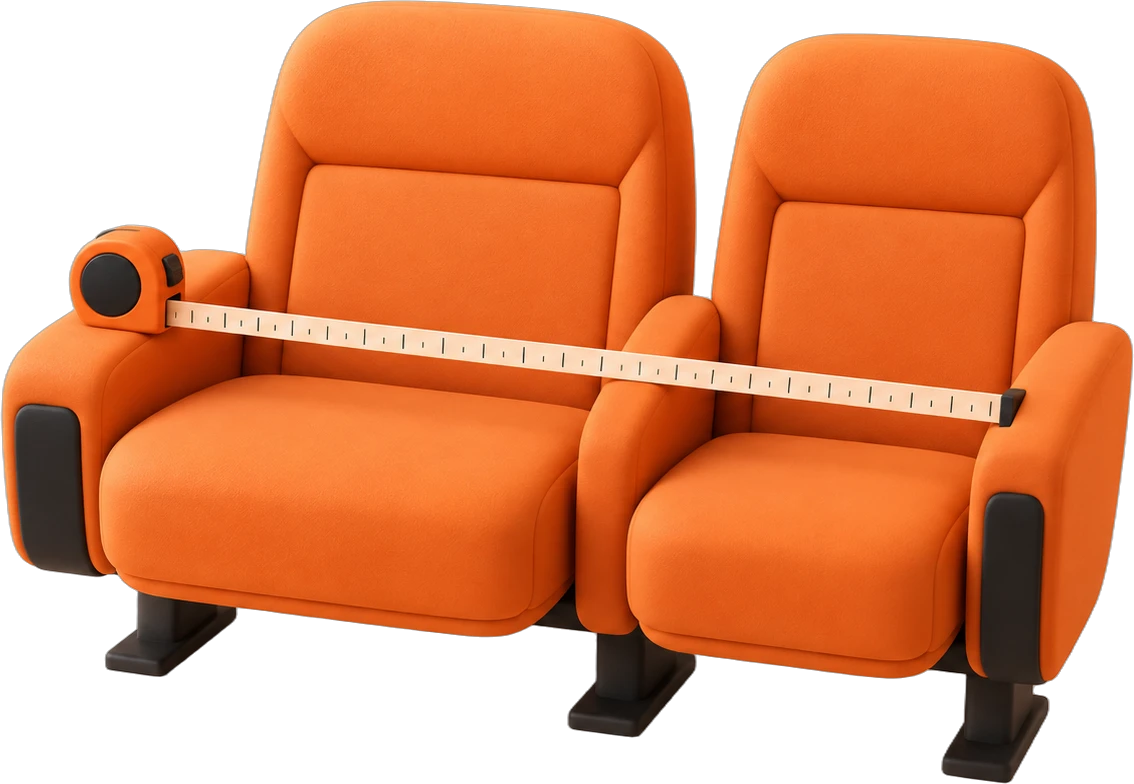
Measured across the back, shoulder tip to shoulder tip. Most adults sit between 15 and 20 inches.
The width between the armrests. Every seat map lists it per cabin, usually 17 to 18.5 inches in economy.
Room across the shoulders
-0.5in
Your shoulders slightly overlap the seat edge. Fine solo, closer if the middle seat fills up.
Tip: window and aisle seats let you angle your shoulders outward for more room. A wider cabin or premium seat adds an inch or two.
Shoulders versus the armrests
Two measurements tell you whether a seat will feel roomy or tight.
- 1
Measure your shoulders
Set your shoulder width, tip to tip across the back. Most adults sit between 15 and 20 inches.
- 2
Add the seat width
Enter the width between the armrests from the seat map, or load a quick scenario.
- 3
We find the clearance
We subtract your shoulders from the seat width to see how much room is left on either side.
- 4
Judge the fit
Roomy, comfortable, snug, or tight, so you know whether to lean toward a window or a wider cabin.
About the width comfort check
What the numbers mean and where they come from.
Measure straight across your back from the tip of one shoulder to the other, ideally with a friend and a soft tape. It is wider than your chest measurement, and it is what actually competes for space in the seat.
More seat tools
Know the cabin first
The tools are sharper when you can see the map. Browse the aircraft you are flying, then run the numbers.

Better seats, inyour inbox
Seat tips and newly mapped aircraft, one email a week.
Unsubscribe anytime. We never share your email.