Best Seat for Flying with a Baby: A Practical Guide
Learn how to choose the best seat for flying with a baby, from bassinet-ready bulkheads to aisle access, noise, and aircraft swaps
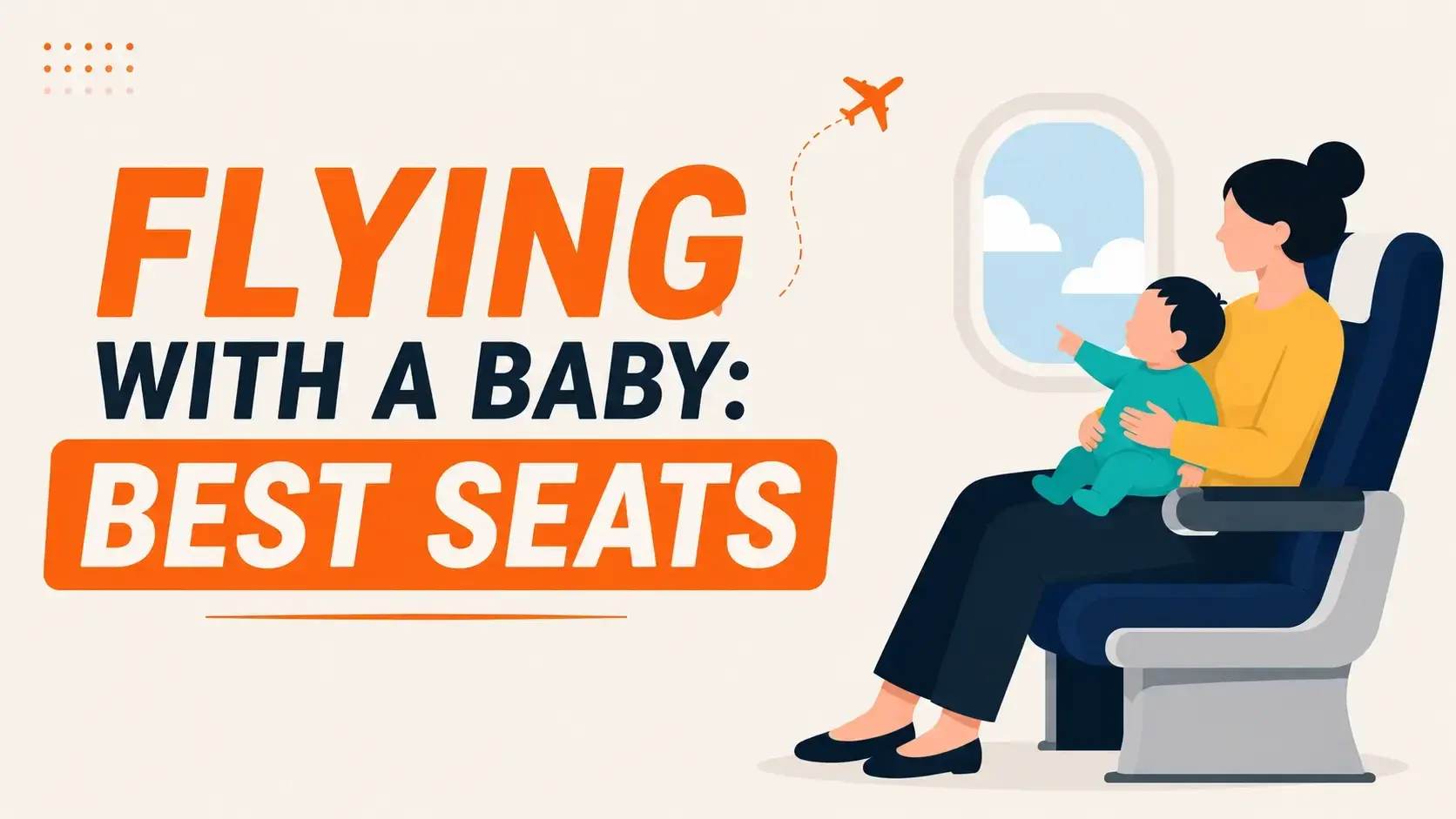

Best Seat for Flying With a Baby: What to Know
You booked your flight, paid extra for a seat, and now you are staring at the airline seat map wondering if you picked the right one. Will the bulkhead row actually fit a bassinet? Is the aisle seat better than the window when you are holding an infant? Does it even matter which row you choose?
Finding the best seat for flying with a baby is not about picking whatever looks spacious on the map. It depends on the aircraft, the cabin configuration, and what your baby actually needs during the flight: room to nap, quick access to the aisle, or distance from a noisy galley.
In this guide, we will walk through how to evaluate seats for baby travel, so you can make a confident choice instead of a guess.
TL;DR
- Bassinet availability depends on the specific aircraft, not just the airline or plane model, so always verify before you pay for a seat.
- Bulkhead rows are not automatically the best choice. They offer bassinet access but often come with fixed armrests and no underseat storage during takeoff.
- Aisle seats usually work better than window seats for quick changes, walks, and getting up without disturbing other passengers.
- Seats near a galley or lavatory bring more noise and foot traffic, which can matter a lot for a napping baby.
- Aircraft swaps can change or remove your bassinet seat, so recheck the seat map closer to departure.
How Aircraft Configuration Affects Your Seat Choice with a Baby
Finding the best seat for flying with a baby starts with understanding that two flights on the 'same' aircraft type can have completely different cabins. One Boeing 777 might have a bassinet-ready bulkhead in row 20, while another has a galley or lavatory in that exact spot instead. This is why the seat map alone will not tell you the full story.
Airlines often operate several versions of the same aircraft, especially on long-haul routes. The configuration affects where bassinets can be mounted, how many bulkhead seats exist, and whether those seats are even bookable in advance.
Before you decide on a seat, it helps to understand a few basics:
- Aircraft variant matters more than the model name. A 787-9 flown by one airline may have a different cabin layout than a 787-9 flown by another, or even a different one flown by the same airline on a different route.
- Bulkhead rows are not guaranteed to fit a bassinet. Some bulkheads are too narrow, too close to a door, or reserved for crew equipment.
- Row numbers can shift between configurations. The row that had a bassinet last year may not have one on your specific flight.
- Scheduled aircraft can change. What is listed at booking may not be what actually operates the flight.
The practical takeaway: do not assume a bassinet seat based on general aircraft type alone. Check the configuration for your specific flight, and recheck it as your departure date gets closer, since aircraft swaps are common on long-haul and connecting routes.
Bulkhead Seats: Where to Sit for Bassinet Access
Bulkhead rows get a lot of attention from parents because they are usually the only seats where an airline can mount a bassinet. But a bulkhead is not automatically the right choice for every family, and it comes with real tradeoffs.
Here is what typically comes with a bulkhead seat:
- Bassinet mounting point, if the aircraft supports it for that specific row
- Extra legroom in front, since there is no seat ahead of you
- Fixed, non-moving armrests, which can make it harder to shift a sleeping baby
- No underseat storage during takeoff and landing, since your bags need to go in the overhead bin instead
- Tray tables stored in the armrest, which can make the seat feel narrower than expected
If legroom is your main priority, a legroom fit tool lets you compare exact seat-inches across rows before you decide
| Seat Option | Main Advantage | Main Limitation | Best For |
|---|---|---|---|
| Bulkhead | Bassinet access, open legroom | Fixed armrests, no underseat storage at takeoff | Families needing a bassinet for a long flight |
| Exit row | Extra legroom | Usually not bassinet-eligible, restricted recline | Travelers without an infant in arms |
| Rear cabin | Often quieter, more empty seats | More engine noise, slower deplaning | Families comfortable holding the baby the whole flight |
| Row near galley | Convenient for warming bottles, quick crew access | Light, noise, and passenger foot traffic | Short daytime flights only |
Best for bassinet access: A bulkhead row confirmed to support one for your aircraft. However, families who need quick under-seat access to diaper bags or bottles during the flight may find the fixed armrest and bin-only storage inconvenient.
The bulkhead is worth requesting if your baby will actually use the bassinet for sleep. For many parents, a confirmed bassinet bulkhead is the best seat for flying with a baby, but only if your baby will actually use the bassinet for sleep.
Aisle vs Window vs Middle: Best Seat Choice Flying with a Baby
Choosing where to sit flying with a baby often comes down to a simpler question than bulkhead versus standard row: aisle, window, or middle. Each has a different impact once you are actually managing a baby mid-flight.
- Aisle seat: Easiest for walking a fussy baby, reaching the lavatory for diaper changes, and getting up without waking a sleeping partner. The tradeoff is more exposure to the drink cart and passing passengers, which can disturb a light sleeper.
- Window seat: Offers a more contained space for a baby to nap or play against the wall, with less traffic passing by. The downside is that leaving your seat means climbing over anyone seated beside you.
- Middle seat: Rarely ideal, but if you are traveling as a pair, a middle plus aisle combination can let one adult step out while the other stays with the baby.
If seat width matters more than aisle access for your baby's comfort, a seat width tool lets you compare seats by exact dimensions.
For most families, the aisle seat wins for practicality, especially on flights where you expect to be up and down often. Window seats can work better for babies who nap easily and do not need frequent movement.
Where to Sit on the Plane for a Quieter, Calmer Flight with a Baby
Where you sit flying with a baby affects more than legroom. Noise and foot traffic can be the difference between a baby who sleeps through the flight and one who wakes up every time a cart rolls by.
A few spots to be cautious about:
- Rows next to a galley: Crew activity, meal prep noise, and cabin lighting stay on longer here, even during rest periods.
- Rows near a lavatory: Frequent passenger traffic, occasional odors, and the sound of the door and flush cycle.
- Rows near the boarding door: Louder during boarding and deplaning, and often catch more temperature and noise during ground stops.
On the other hand, mid-cabin rows, away from doors and galleys, tend to be calmer. If your flight has multiple cabin sections, a bulkhead at the front of a rear section can sometimes offer bassinet access with less nearby traffic than a bulkhead right behind a galley.
Cabin lighting also matters on overnight flights. Rows near galleys often stay brighter longer while crew prepares meals, which can interfere with a baby's sleep schedule even if the row itself is otherwise comfortable.
If you're specifically booking an overnight flight, SeatInfo's red-eye picker can help you narrow down quieter rows for that route
What to Check Before You Pay for a Seat (Aircraft Swaps and Rechecking)
Even after you've identified the best seat for flying with a baby, paying extra for a bassinet-eligible seat only to lose it to an aircraft swap is a common frustration. A few checks before and after booking can prevent this.
Before selecting a seat:
- Confirm the bassinet weight and age limit for the airline, since most cut off around 6 months or a specific weight, not a fixed age for every carrier
- Verify that the specific aircraft and row combination supports a bassinet, not just the general aircraft type
- Check whether bassinet seats can be pre-booked or are only assigned at check-in
After booking:
- Recheck the seat map a few weeks before departure, since aircraft assignments can change
- If the aircraft changes, look at whether the new configuration still has a bassinet-eligible bulkhead
- Contact the airline directly if your bassinet request does not appear confirmed close to departure
Aircraft swaps do not always remove your seat characteristics, but they can. Treating your original seat selection as provisional, and rechecking it, is the safest approach for family travel.
Making Sense of Seat Information Before You Fly
Comparing seat options to find the best seat for flying with a baby is not always straightforward from an airline's seat map alone. Two seats can look identical on the map while having very different bassinet access, legroom, or proximity to noise.
This is where SeatInfo can help. It brings together seat maps, seat scores, and seat-level details so you can compare bulkhead rows, check configuration differences, and see relevant seat information for your specific flight before you choose. Coverage depends on the airline, route, and available data, so it works best as one part of your research alongside the airline's own booking system.
For families trying to identify a bassinet-eligible seat or avoid a noisy row, having this context ahead of time can reduce a lot of the guesswork that comes with reading a seat map on its own.
Conclusion
The best seat for flying with a baby depends on your aircraft's configuration, whether your baby will use a bassinet, and how much movement you expect during the flight. A bulkhead row can offer bassinet access, but it comes with fixed armrests and limited storage. An aisle seat often makes more sense if you anticipate frequent walks or changes. Before you finalize a seat, verify the aircraft's specific layout and recheck it closer to departure in case anything changes.
SeatInfo can make this comparison easier by showing seat-level details and configuration differences for your specific flight, so you are not relying on the airline's seat map alone.
Review the seat map for your flight before you make a final selection.
Frequently asked questions
Topics
Keep reading
All blogs






See the cabin before you book it
Every blog here starts from a real seat map. Browse the catalog to scale, or run your own flight through the live tool.

Better seats, inyour inbox
Seat tips and newly mapped aircraft, one email a week.
Unsubscribe anytime. We never share your email.