Best Seat for Sleeping on a Plane: Sleep Better While Flying
The best seat for sleeping on a plane is a window seat away from lavatories and galleys. Claim the wall, cut interruptions, and sleep longer.
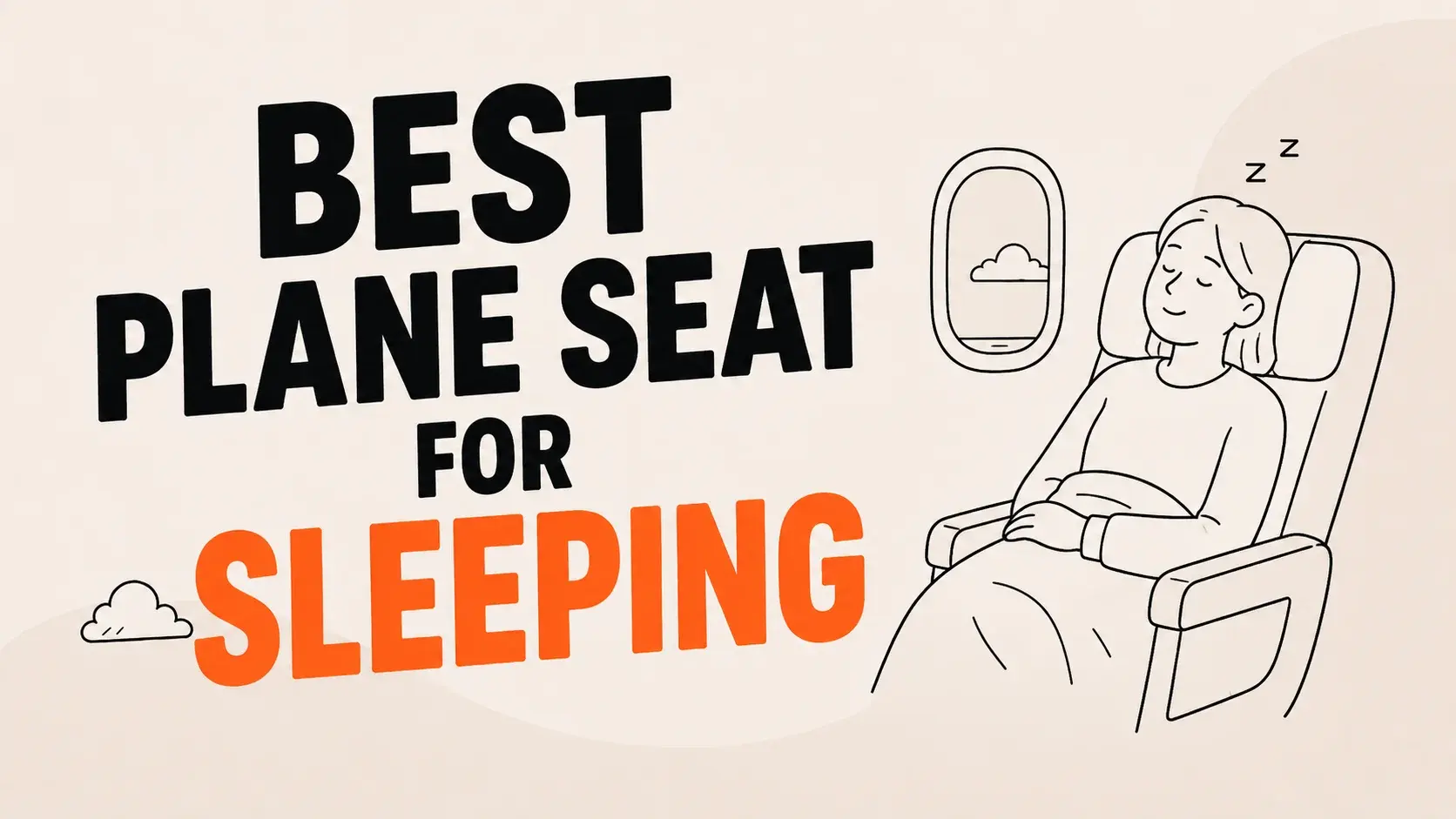

Best Seat for Sleeping on a Plane: How to Choose the Right One
The best seat for sleeping on a plane is usually a window seat away from lavatories, galleys, and heavy foot traffic. Your final choice should still account for the aircraft configuration, recline, legroom, and your need for aisle access.
- Choose a window seat when uninterrupted rest matters most.
- Check the row, not only the seat letter, before paying for a seat.
- Treat bulkhead and exit-row seats as tradeoffs, not automatic upgrades.
- Recheck your seat map if the airline changes the scheduled aircraft.
Choosing a seat for an overnight flight can feel simple until you notice the tradeoffs. Will the window seat have a usable window? Is the extra-legroom row next to a galley? Could a different cabin configuration change the seat entirely? In this guide, you will learn how to make a seat choice sleeping on a plane that fits your flight and sleep habits.
What Is the Best Seat for Sleeping on a Plane?
For most travelers, the best seat for sleeping on a plane is a window seat in a quieter row. It gives you a wall to lean against and reduces the chance that another passenger will wake you to leave their seat.
Use the following priorities to decide what matters most to you.
- Uninterrupted rest: Choose a window seat if you want fewer disturbances from a seatmate moving toward the aisle.
- Easy movement: Choose an aisle seat if you expect to stretch, visit the restroom, or feel uncomfortable remaining in one sleep position.
- More room: Consider an extra-legroom seat if seat pitch limits your ability to shift position or extend your legs.
- Better support: Bring a travel pillow if you need neck support, especially when your seat does not provide a useful wall to lean against.
A middle seat is usually the weakest choice for sleep because you have people on both sides. It can be more manageable when you are traveling with companions who occupy the window and aisle seats.
Is a Window Seat the Best Airplane Seat for Sleeping on a Plane?
A window seat is often the best airplane seat for sleeping on a plane because it gives you a place to rest your head and limits seatmate interruptions. Still, a seat beside a missing or misaligned window, a lavatory, or a galley may not deliver the quiet experience you expect.
This comparison shows where each seat type works best.
| Seat type | Main advantage | Main limitation | Best for |
|---|---|---|---|
| Window seat | Surface to lean against and fewer interruptions | Harder to leave your seat | Travelers prioritizing sleep |
| Aisle seat | Easier access to stretch and move | More disturbance from passing passengers | Travelers who need frequent movement |
| Middle seat | May work when traveling with companions | Limited personal space and two seatmates | Families or groups |
| Exit-row seat | Potentially more legroom | Storage or recline restrictions may apply | Tall travelers who verify the row |
| Bulkhead seat | No passenger reclining directly ahead | Fixed armrests and limited floor storage may apply | Travelers who prefer open knee space |
Before choosing a window seat, review whether the window aligns with the seat. Some rows place the window partly behind or ahead of the seat, which reduces its value for sleeping and viewing outside.
Where to Sit Sleeping on a Plane for Fewer Disturbances?
Row location can affect sleep as much as seat position. Cabin noise, engine noise, overnight service, lavatory proximity, and galley proximity can turn a promising seat into a restless one. The quietest seats on a plane vary by airline, aircraft type, and cabin version.
1. Choose Quieter Cabin Areas, Then Verify Their Limits
A row away from the busiest service areas usually creates fewer interruptions. However, avoid assuming that the front, middle, or rear cabin is always quiet without checking the layout.
Look for these conditions on the seat map.
- Lower traffic: Choose rows away from lavatories, galleys, bassinet positions, and cabin crossovers when possible.
- Fewer light disruptions: Avoid seats near areas where crew members may work during a red-eye flight.
- Less service activity: Check whether the row sits beside a service area that could remain active after cabin lights are dimmed.
- Aircraft-specific placement: Compare the scheduled layout because the same aircraft model can have different galley and lavatory positions.
For a clearer view of cabin layout, review airline seat maps and aircraft seat maps before choosing.
2. Are Bulkhead and Exit-Row Seats Better for Sleeping?
Bulkhead and exit-row seats can improve comfort, but they solve different problems. An exit row may provide more legroom, while a bulkhead may prevent another passenger from reclining into your space.
Check these limits before selecting either option.
- Exit-row eligibility: You may need to meet airline safety requirements, and some travelers may not qualify.
- Recline: A seat near an exit or cabin wall can have limited recline, even when it has extra space.
- Storage: Bulkhead and exit-row seats may require you to store carry-on items overhead during takeoff and landing.
- Armrests: Tray tables may sit inside the armrests, which can reduce usable seat width.
- Noise exposure: A bulkhead near a galley or bassinet position can bring more conversation, light, and foot traffic.
Use a legroom calculator and seat width comparison tool when space matters more than easy aisle access.
3. Which Seats Should You Avoid on an Overnight Flight?
The seats to avoid on a plane are usually those with recurring disturbances or reduced comfort features. A lower fare or open seat does not always mean it is suitable for sleep.
Watch for these warning signs.
- Restricted recline: Seats near exits, cabin walls, or certain rear rows may not recline fully.
- High foot traffic: Seats beside lavatories and galleys may bring frequent interruptions.
- Poor window alignment: Some window seats have no usable window or only a partial one.
- Narrower seating: Fixed armrests can reduce practical seat width, even when the published dimensions look similar.
- Uncertain layout: An older cabin configuration may differ from the image shown during booking.
How Should You Make a Seat Choice for Sleeping on a Plane Before You Pay?
A good seat choice sleeping on a plane starts with the specific flight, not a generic recommendation. Airline maps show open seats, but they may not explain recline limits, cabin noise, or differences between aircraft versions.
Use this three-step check before paying for a seat.
1. Confirm the Scheduled Aircraft and Cabin Version
Start by identifying the aircraft assigned to your flight and whether the airline operates multiple versions of that cabin. A Boeing or Airbus model name alone does not confirm the exact seat layout.
- Check the configuration: Compare cabin classes, row numbering, galley placement, and lavatory locations.
- Review the seat: Look for seat pitch, seat width, recline, window alignment, and nearby traffic areas.
- Compare available options: Use SeatInfo’s seat comparison page if several rows appear similar.
- Recheck before departure: An aircraft swap can change the seat number, cabin product, and practical comfort of your assigned seat.
- Monitor availability: Use the live seat map where supported if a better seat may open closer to departure.
For a red-eye flight, the red-eye picker can help you focus on sleep-related seat factors instead of availability alone.
When Are Extra-Legroom and Premium Economy Seats Worth It for Sleep?
Extra-legroom and premium economy seats can help when you need more space to change position. They are not automatically the best seat for sleeping on a plane if the row is noisy, exposed to light, or has limited recline.
Compare the cabin options against your priorities.
| Cabin option | Sleep benefit | Check before paying |
|---|---|---|
| Standard economy | Lower cost and more seat choices | Recline, row location, and seat pitch |
| Extra-legroom economy | More room to shift position | Exit-row restrictions, storage, and recline |
| Premium economy | Often wider seating and more recline | Cabin location, price, and aircraft variation |
Use SeatInfo’s seat score tool to compare available options when you are deciding whether the extra cost matches the comfort benefit.
How Can SeatInfo Help You Compare the Best Seat for Sleeping on a Plane?
Airline seat maps can show availability without explaining the passenger experience behind each row. SeatInfo helps you compare seat details before you select a seat, especially when several available seats appear nearly identical.
Use SeatInfo as part of your pre-flight check.
- Seat maps: Review cabin layouts, nearby facilities, and seat positions through SeatInfo.
- Seat details: Use seat insights to assess relevant comfort information where available.
- Configuration comparison: Check whether your flight may use different cabin versions before relying on a general seat recommendation.
- Availability monitoring: Review changes where supported, while remembering that seat availability and aircraft assignments can change.
Coverage and available details depend on the airline, route, aircraft configuration, and current data.
What Should You Check Before Choosing Your Seat?
The best seat for sleeping on a plane is the one that matches your need for quiet, support, space, or easy movement. Start with a window seat, then check the aircraft configuration, recline, seat map, and nearby cabin features before confirming your choice.
Before you select or pay for a seat, review these final details.
- Confirm whether the seat is near a lavatory, galley, bassinet position, or high-traffic area.
- Check whether the seat has restricted recline, fixed armrests, or limited under-seat storage.
- Revisit the layout if the airline changes the scheduled aircraft.
- Review your available options on SeatInfo before confirming your seat.
FAQs
1. Can a travel pillow make an aisle seat better for sleeping?
Sometimes. A travel pillow can improve neck support in an aisle seat, but it cannot prevent frequent interruptions when a seatmate leaves. It works best when easy movement matters more to you than leaning against a window.
2. Does a blocked seat on an airline map mean someone has booked it?
Not always. Airlines may block seats for operational, crew, family, accessibility, or elite-status reasons. A blocked seat can later become available, but you should not assume it will open before departure or remain open.
3. Is the back of the plane always worse for sleep?
No. Rear seats can be noisier and slower to exit, but the experience depends on the aircraft layout. A rear window seat away from lavatories may be quieter than a seat beside a forward galley.
4. Can flight turbulence affect where you should sit for sleep?
Yes. Some travelers prefer seats closer to the aircraft’s center of gravity because motion may feel less pronounced there. Turbulence still depends on weather, altitude, and flight conditions, not seat location alone.
5. Should families choose bulkhead seats for an overnight flight?
Bulkhead seats can work for families, particularly when bassinets are available. However, nearby infant activity, fixed armrests, and limited floor storage may affect sleep. Check the airline’s bassinet positions and seating rules before selecting.
6. Can an aircraft swap change my window seat into an aisle seat?
Yes. An aircraft swap can alter cabin layouts, seat numbering, and seat characteristics. The airline may reassign you automatically, so review the updated seat map and choose another available option if your replacement no longer suits you.
Topics
Keep reading
All blogs





See the cabin before you book it
Every blog here starts from a real seat map. Browse the catalog to scale, or run your own flight through the live tool.

Better seats, inyour inbox
Seat tips and newly mapped aircraft, one email a week.
Unsubscribe anytime. We never share your email.