Best Seat for Turbulence: Where to Sit During a Flight
For less shaking, the best seat for turbulence is over the wings. Find out which rows feel steadier and which seats can make bumps feel worse during a flight.
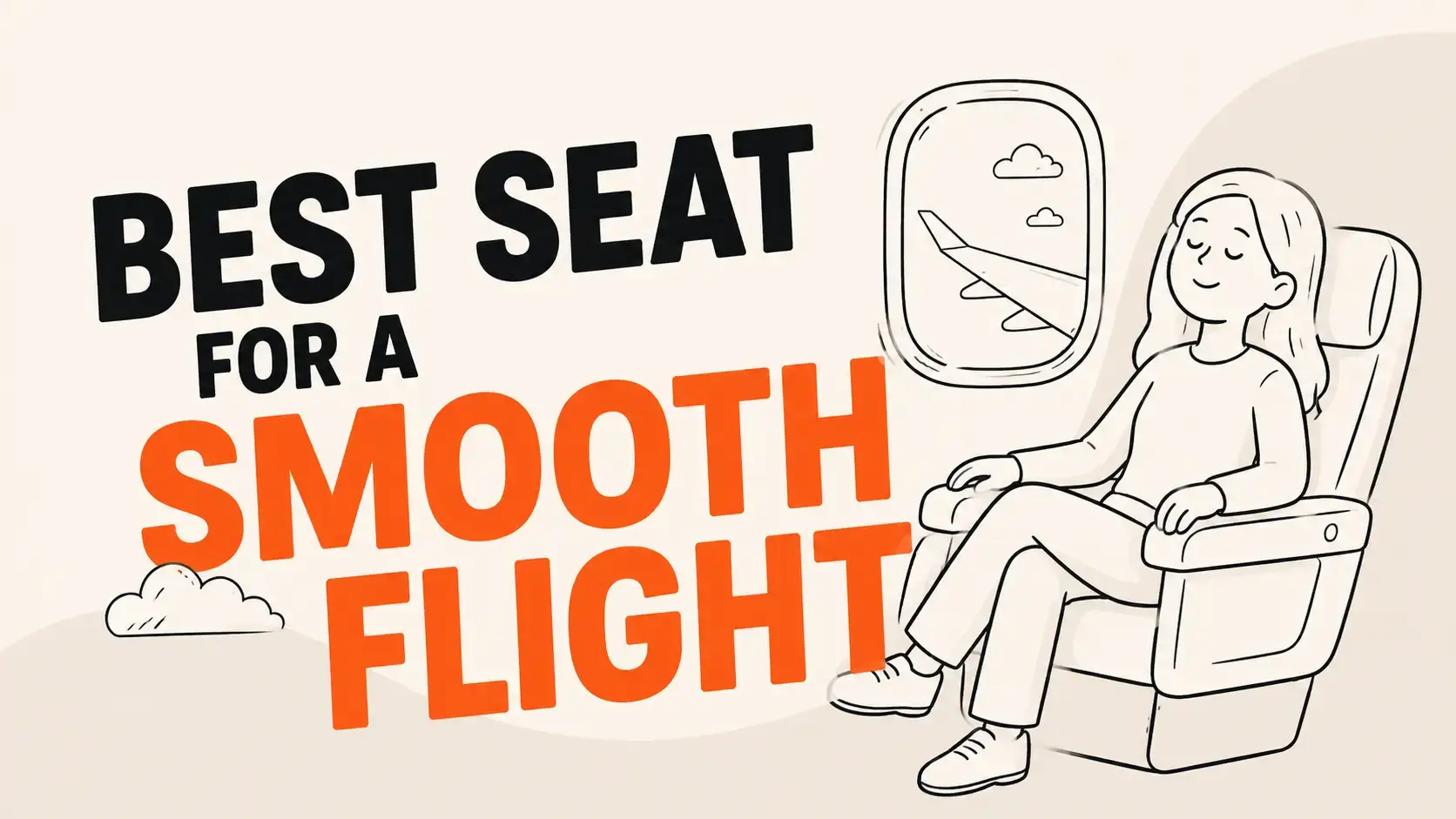

Best Seat for Turbulence: Where to Sit for a Smoother Flight
If turbulence makes you uneasy, seat location can change how strongly airplane movement feels. Is an airplane seat over the wing better? Is the rear rougher? The best seat for turbulence is generally over or close to the wings because this area is nearer the aircraft’s center of gravity.
In this guide, you’ll learn where to sit for turbulence, what affects your comfort, and which tradeoffs matter before selecting a row.
Key Takeaways
Use these points as a quick seat choice turbulence checklist:
- Over-wing seats: Start around the wing area when you want seats with less turbulence and less noticeable pitching motion.
- Front vs rear: Seats toward the front can feel steadier than far-rear seats.
- Window vs aisle: Choose based on anxiety, motion sickness, and comfort.
- Aircraft configuration: Check aircraft seat maps because the ideal seat row changes by aircraft type and airline seat configuration.
What Is the Best Seat for Turbulence?
The best airplane seat for turbulence is usually near the middle of the plane, close to the aircraft wings. Middle of plane turbulence can feel less pronounced than far-rear movement. This location cannot remove rough air, vertical motion, or clear-air turbulence, but it can reduce how strongly some rotational movement feels.
Here is a quick comparison:
| Cabin Area | What You May Notice | Main Tradeoff |
|---|---|---|
| Front of the aircraft | Less noticeable pitching than far-rear seats | Often premium or preferred seating |
| Over the wings | Closer to the aircraft’s central area | Wing views or exit-row restrictions may matter |
| Rear of the aircraft | Pitching can feel more noticeable | Slower deplaning and more rear-cabin traffic |
Why Is the Best Airplane Seat for Turbulence Usually Near the Wings?
NASA explains that an airplane rotates around its center of gravity, while most lift comes from the wings. Distance from that central area can therefore affect perceived pitching.
Keep these points in mind:
- Aircraft stability and movement: Seats near the wings can experience less noticeable pitching than seats farther forward or aft.
- Safety: The least turbulent seat on plane is not a special safety zone. It is simply where some motion may feel less pronounced.
- Turbulence event: Every section of the cabin still encounters the same atmospheric disturbance.
- Seat selection: Once you identify the wing area, use SeatInfo’s seat-map glossary to understand seat ratings, cabin symbols, and potential seat tradeoffs before choosing.
Is Turbulence Worse at the Front or Back of the Plane?
For front vs back of plane turbulence, the rear can have more noticeable pitching because it is farther from the aircraft’s central area. Front of plane turbulence still occurs.
Use this order when motion matters most:
- Seats near the wings: The best starting point when finding the best seat for turbulence.
- Front cabin: A reasonable alternative when over-wing options have poor seat characteristics or limited availability.
- Rear cabin: Better when price, companion seating, or another comfort preference matters more.
Where Should You Sit for Turbulence if You Get Motion Sick or Anxious?
The best place to sit on a plane depends on more than movement. With flight anxiety or motion sickness, visibility, aisle access, personal space, and cabin traffic also matter.
Match the seat to your priority:
- Motion sickness: Airplane seating for motion sickness often starts near the wings. A window may help if an outside reference point keeps you oriented.
- Flight anxiety: The best seat for nervous flyers may pair an over-wing row with whichever seat feels less confining. SeatInfo’s red-eye seat picker can also help you assess seat traits when comfort and rest are priorities.
- Cabin traffic: Avoid busy galleys and lavatories if frequent movement around your seat adds stress.
Is a Window, Aisle, or Middle Seat Better During Turbulence?
For window vs aisle seat turbulence, the row’s position matters more than whether you choose the window, aisle, or middle.
Choose by comfort:
- Window seat: Gives you an outside reference point and a cabin wall to lean against.
- Aisle seat: Gives you easier access and may feel less confined.
- Middle seat: Experiences similar airplane movement within the same row but offers less personal space.
What Seat Choice Helps if Turbulence Makes Flying Stressful?
Combine a central aircraft seating position with the seat type you prefer. Plane seat comfort during turbulence still matters, so choosing the smoothest location should not mean accepting a seat that creates another problem.
Check these details:
- Wing position: Start with over-wing seats or a nearby row when searching for the best airplane seat for turbulence.
- Disturbance: Look for distance from galleys, lavatories, and high-traffic areas.
- Restrictions: Review bulkhead seats and emergency exit rows for storage, armrest, recline, or eligibility limits.
- Legroom: If several suitable rows are available near the wings, use the legroom fit calculator to compare comfort before choosing.
Does Aircraft Type Change Your Seat Choice for Turbulence?
Yes. “Sit near the wings” does not mean one universal row. A narrow-body aircraft and a wide-body aircraft can place wings, exits, cabins, and row numbers differently.
Check these factors before selecting:
- Aircraft type: Confirm the scheduled model, then use SeatInfo’s seat maps by aircraft to compare layouts for that model.
- Airline seat configuration: The same aircraft model can use different layouts and row numbering. Compare the configuration instead of assuming that a row recommendation from another airline or flight applies to yours.
- Wing area: Find the wings visually on the airplane seat map instead of copying a row number from another flight.
- Seat characteristics: A row in the ideal aircraft position may still have limited recline, a poor window position, restricted storage, or extra cabin traffic. SeatInfo’s guide on how to pick the best airplane seat can help you weigh these tradeoffs.
- Aircraft size: Bigger planes can feel different, but size alone does not predict turbulence intensity.
- Flight conditions: Atmospheric conditions drive turbulence, so no aircraft or seat can promise a bump-free flight. The FAA notes that turbulence can result from several atmospheric conditions and can occur even when skies appear clear.
How Can SeatInfo Help You Compare Seats for a Smoother Flight?
An airline map may show availability without explaining every comfort tradeoff. SeatInfo helps you compare aircraft-specific seat information before selecting.
For turbulence-related research, use SeatInfo to check:
- Seat maps: Identify rows positioned around the wings.
- Seat comparison: Compare nearby seats when one has a restriction or poor location.
- Configuration context: Review aircraft layouts instead of assuming identical interiors.
- Flight-specific changes: Recheck seat information when the scheduled aircraft or configuration changes, where data is available.
SeatInfo is a seat decision-support platform, not an airline booking system. Aircraft assignments and availability can change.
Conclusion
For most travelers, the best seat for turbulence is over or close to the wings. Start there when choosing a seat for a smoother flight or searching for the smoothest seat on airplane.
Before you confirm:
- Start near the wings: Use this as your first filter for the best plane seats for a smoother ride.
- Choose your seat type: Pick a window or aisle according to anxiety, motion sickness, and comfort.
- Check the configuration: Row numbers and wing positions vary.
- Recheck before departure: An aircraft swap can change your original choice.
Review your flight’s seat information with SeatInfo before paying for or confirming a seat.
FAQs
1. Is a seat over the wing safer during turbulence?
Sitting over the wing does not make you safer than passengers in other cabin areas. The main benefit is comfort, since some aircraft movement may feel less pronounced there. Keep your seat belt fastened and follow crew instructions during turbulence.
2. Are exit-row seats good for turbulence?
Exit-row seats can be a good choice when the row is positioned near the wings. However, the exit-row designation itself does not reduce turbulence. Check the seat’s location, recline, storage restrictions, fixed armrests, and eligibility requirements before selecting it.
3. Does business class feel less turbulence than economy?
Business class does not automatically experience less turbulence than economy. Some business-class cabins are positioned toward the front, where pitching may feel less noticeable than at the rear. Your position within the aircraft matters more than the cabin class itself.
4. Can choosing the right seat stop you from feeling turbulence?
No seat can prevent you from feeling turbulence completely. Choosing a seat near the wings may reduce how noticeable certain aircraft movements feel, but bumps can still occur throughout the cabin when the aircraft passes through turbulent air.
5. Do bigger planes feel less turbulence?
Larger aircraft can sometimes make certain movements feel less noticeable, but aircraft size does not guarantee a smoother flight. Weight, design, speed, atmospheric conditions, and your seat location can all affect how strongly you perceive turbulence during the flight.
6. Can pilots always predict turbulence before it happens?
No. Pilots use weather forecasts, onboard information, air traffic reports, and reports from other aircraft to anticipate turbulence. However, clear-air turbulence can occur without obvious visual warning, which is why keeping your seat belt fastened while seated is recommended.
Topics
Keep reading
All blogs




See the cabin before you book it
Every blog here starts from a real seat map. Browse the catalog to scale, or run your own flight through the live tool.

Better seats, inyour inbox
Seat tips and newly mapped aircraft, one email a week.
Unsubscribe anytime. We never share your email.