Exit Row vs Bulkhead: Which Should You Choose?
Exit row vs bulkhead seats compared by legroom, recline, storage, and who each one suits best. Check before you pay for one.
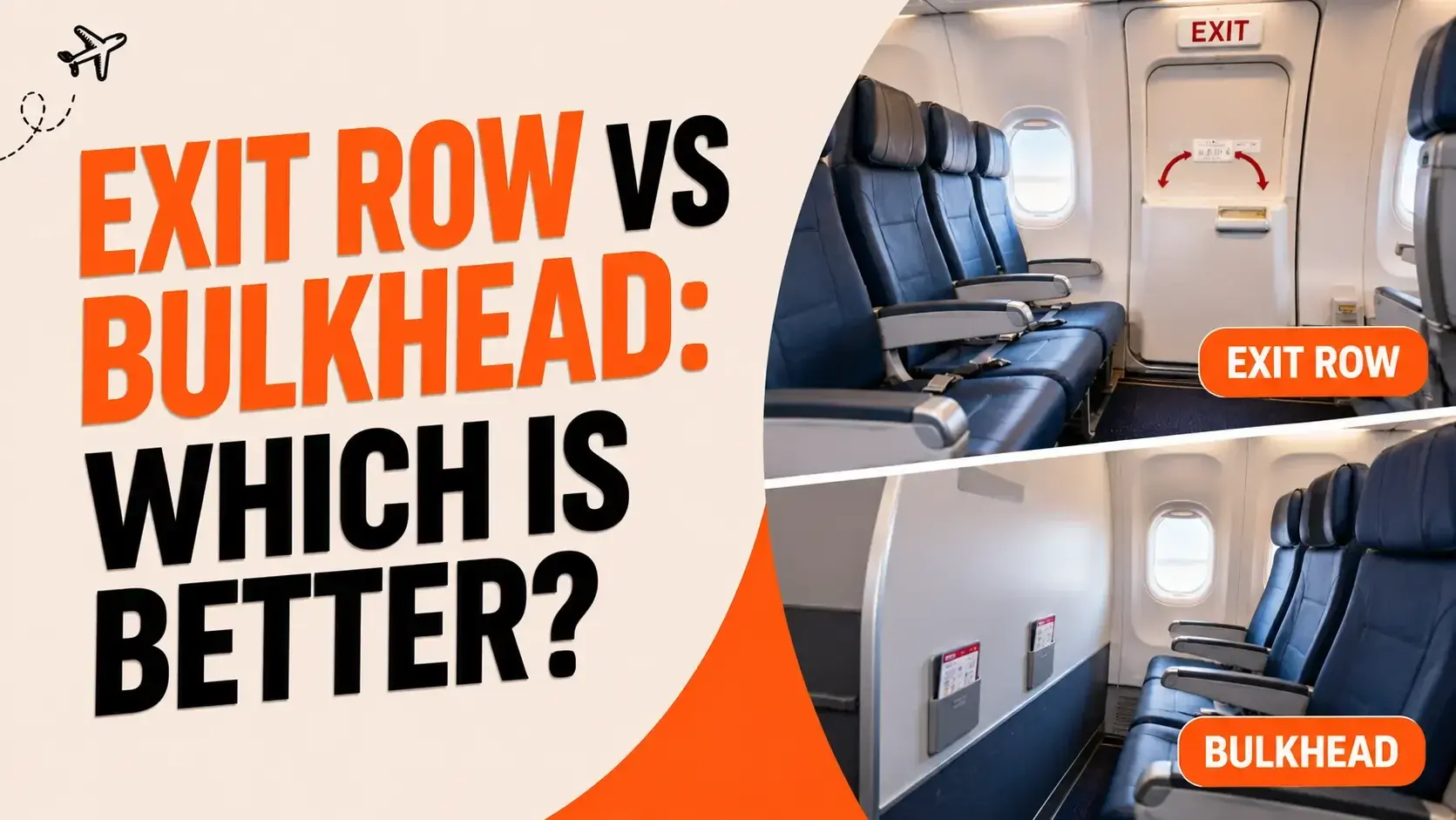

Exit Row vs Bulkhead: Which Seat Fits Your Flight?
You are checking in for a long flight and the seat map shows two tempting options: an exit row seat and a bulkhead seat. Both promise extra space, but the airline map does not tell you what each one actually feels like once you are in it.
Is the exit row seat worth the added cost? Will the bulkhead give you more room or take away your under-seat storage? The answer depends on the aircraft, the traveler, and what you value most on that specific flight.
In this guide, we compare exit row vs bulkhead seats so you can match the right option to your travel needs.
TL;DR
- Exit row seats usually offer more legroom but come with eligibility rules and possible recline or storage restrictions.
- Bulkhead seats give you open space in front, but armrests are often fixed, and floor storage may be limited during takeoff and landing.
- Families traveling with infants should check bassinet placement before choosing a bulkhead seat.
- Tall travelers often prioritize exit row seats, while travelers who want to stretch without needing to move a bag may prefer bulkhead.
- Always recheck the seat map closer to departure, since aircraft swaps can change row numbers and cabin layout.
What Makes Exit Row and Bulkhead Seats Different
Exit row and bulkhead seats get compared often because both are known for extra space. But the space comes from different places, and that changes who each seat actually works for.
An exit row seat sits next to an emergency exit, so airlines are required to keep the area clear for evacuation. A bulkhead seat sits behind a wall or divider, often at the front of a cabin or in front of a galley. Neither position is designed around passenger comfort. The extra room is a side effect of aviation requirements, not a planned feature.
This is also why the same seat number can behave differently on two aircraft of the same model. Aircraft configuration, not just the seat label, decides what you actually get.
Exit Row Seats: Advantages and Limitations
Exit row seats are popular for one clear reason: legroom. But the trade-offs are just as important as the space.
Legroom and Space
Exit rows typically have several extra inches of pitch compared to standard economy rows. This benefit is most noticeable for taller travelers who normally struggle to fit their knees behind the seat ahead.
The amount of extra space varies by aircraft and airline, so the same "exit row" label does not guarantee identical legroom on every flight.
Storage and Recline Restrictions
Exit row seats often come with trade-offs that are not visible on a basic seat map.
- Limited under-seat storage: Bags may need to go in the overhead bin during takeoff and landing, since nothing can block the exit path.
- Restricted or no recline: Some exit rows do not recline at all, to keep the row behind clear for evacuation.
- Tray table location: On some aircraft, the tray table is stored in the armrest, which can make the armrest wider and reduce shoulder room.
Eligibility Requirements
Airlines set specific rules for who can sit in an exit row. These usually include being able to assist during an emergency, meeting a minimum age, and understanding safety instructions in the language used by the crew.
Best for: Tall travelers and those who prioritize legroom above all else.
Avoid if: You are traveling with an infant, need under-seat storage during the flight, or do not meet the airline's exit row eligibility rules.
Bulkhead Seats: Advantages and Limitations
Bulkhead seats trade the exit row's evacuation duty for a wall or divider in front. That changes the type of space you get and the type of restrictions that come with it.
Open Knee Space
With no seat ahead, bulkhead passengers get open floor space instead of legroom in the traditional sense. This can feel spacious, especially for travelers who dislike having a seat back close to their knees.
Fixed Armrests and Under-Seat Storage
Bulkhead seats often come with less flexibility than they first appear.
- Fixed armrests: Many bulkhead seats have armrests that do not lift, since tray tables and screens are stored inside them.
- No under-seat storage: Because there is no seat in front, personal items usually cannot be stored at your feet during takeoff and landing.
- Wall-mounted tray tables: These can feel bulkier than tray tables that fold from the seat ahead.
Bassinet and Family Traffic Considerations
Bulkhead rows are frequently used for bassinet placement on long-haul aircraft, which makes them appealing for families with infants. However, this also means more foot traffic, since other families and crew members pass by more often.
Best for: Travelers who want open knee space and families who need bassinet access. Avoid if: You want to keep a bag at your feet, prefer a flexible armrest, or want to avoid extra foot traffic near your row.
Exit Row vs Bulkhead: Side-by-Side Comparison
Here is how the two options compare when placed next to each other.
| Factor | Exit Row | Bulkhead |
|---|---|---|
| Legroom | Extra pitch in front of the seat | Open floor space instead of pitch |
| Recline | Often restricted or fixed | Usually normal, but check per aircraft |
| Under seat storage | Limited during takeoff and landing | Usually unavailable during takeoff and landing |
| Armrests | Standard, though tray table storage may widen them | Often fixed in place |
| Eligibility | Must meet airline safety requirements | Open to most travelers |
| Foot traffic | Generally low | Can be higher, especially near galleys or bassinets |
| Best for | Tall travelers, legroom priority | Open space, families needing bassinets |
So, is exit row better than bulkhead? Neither one wins outright. The better choice depends on what you are trying to solve for on that specific flight. For a deeper breakdown of how seats are rated on your specific aircraft, see our best seats guide.
How to Choose Between Exit Row and Bulkhead for Your Flight
When you are weighing exit row vs bulkhead for a specific flight, it helps to ask which seat fits your situation rather than which one is better in general.
- If you are tall: Exit row legroom is usually more effective for knee space than a bulkhead's open floor area.
- If you are traveling with an infant: Bulkhead rows are more likely to support bassinet placement, but confirm this with the airline before selecting.
- If you need your bag within reach: Exit row and bulkhead seats both restrict under-seat storage during takeoff and landing, so plan either way accordingly.
- If you want to sleep: Bulkhead seats near a galley may have more light and noise, while some exit rows do not recline, so check both before deciding.
- If the aircraft has multiple configurations: The same seat number may not offer the same experience on every flight, even on the same aircraft type. Confirming the scheduled configuration close to departure helps avoid surprises.
Making Sense of Seat Maps with SeatInfo
Airline seat maps typically show that a seat is an exit row or bulkhead, but they rarely explain what that means for storage, recline, or eligibility. Two seats can look identical on the map while offering very different experiences once you are onboard.
SeatInfo is built to fill in that gap. Rather than just showing availability, it helps travelers compare seat characteristics so the trade-offs are clear before you choose.
Depending on the flight, this can include:
- Seat maps: Review cabin layout and seat positions before you select.
- Seat comparison: Compare exit row and bulkhead options for the same aircraft.
- Traveler tools: Check legroom and width details relevant to your comfort needs.
Coverage and features depend on the airline and aircraft, so it is worth checking what information is available for your specific flight.
Conclusion
When it comes to exit row vs bulkhead seating, the right choice comes down to what you value most on that flight. Exit rows tend to favor legroom and suit taller travelers, while bulkheads offer open floor space and often work well for families needing a bassinet. Both come with tradeoffs in storage, recline, or armrest flexibility, and both can vary by aircraft configuration, so it helps to confirm the details before you pay for either one.
SeatInfo can make this comparison easier by laying out seat characteristics side by side, so you are not guessing based on a seat map alone. Instead of assuming an exit row or bulkhead seat will work the way it did on a previous flight, you can check what that specific aircraft and cabin actually offer.
Before you select your next seat, take a moment to review the live seat map for your flight and compare your exit row and bulkhead options.
Frequently asked questions
It depends on your priorities. If extra legroom matters more than under-seat storage or recline, an exit row seat is often worth the cost. Travelers who need to keep a bag within reach during takeoff and landing may find the tradeoff less appealing.
Topics








See the cabin before you book it
Every blog here starts from a real seat map. Browse the catalog to scale, or run your own flight through the live tool.

Better seats, inyour inbox
Seat tips and newly mapped aircraft, one email a week.
Unsubscribe anytime. We never share your email.