Best Seat for Plus-Size Passengers: Better Flight Comfort
Find the best seat for plus-size passengers with tips on seat width, armrests, and aircraft configuration before booking your flight.
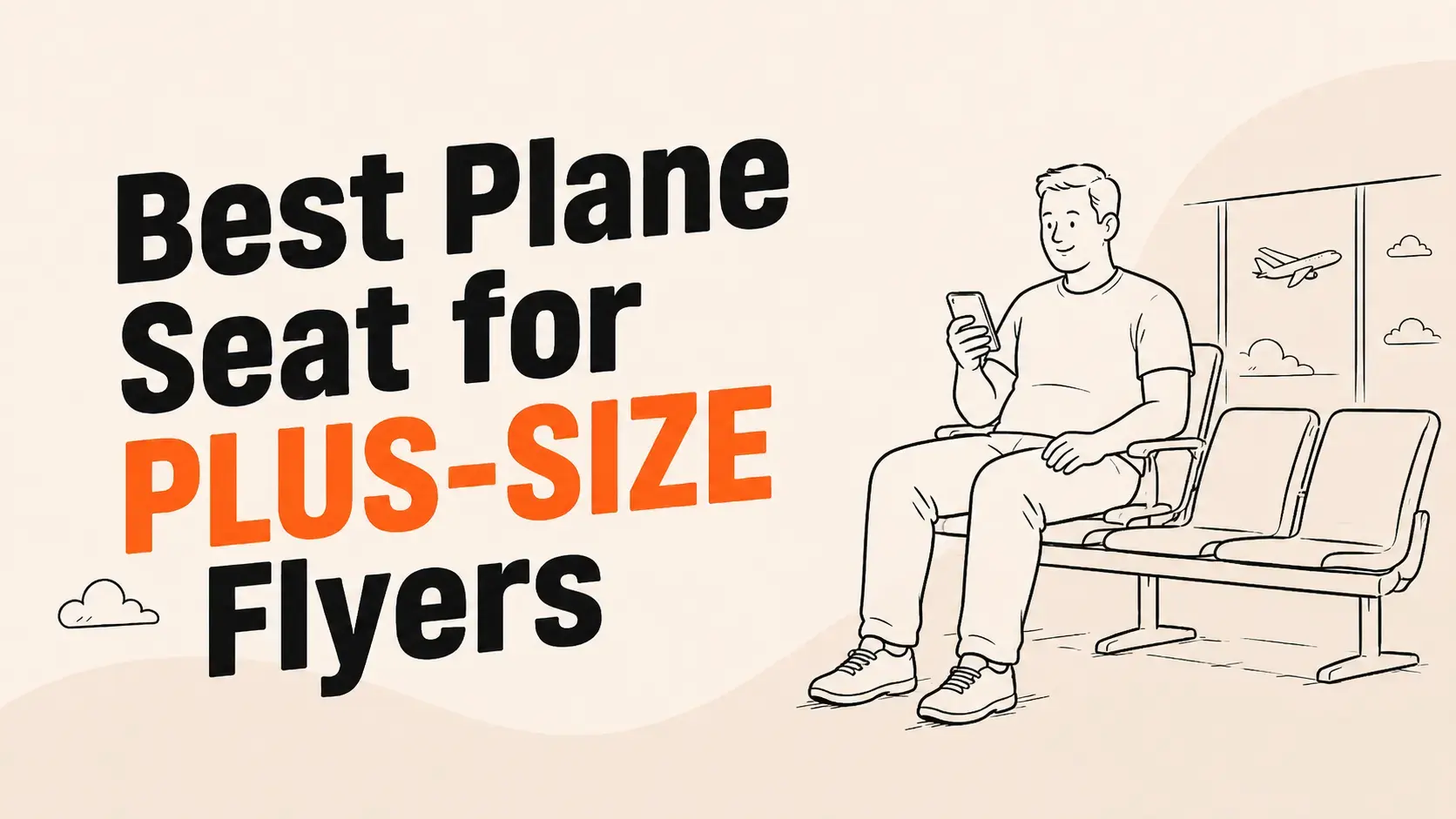

Best Airplane Seat for Plus-Size Passengers: A Practical Guide
Booking a flight can come with an extra layer of stress if you are not sure whether the seat you paid for will actually fit. A seat map might show "extra legroom" or "premium," but it rarely tells you whether the armrest lifts, how wide the seat really is, or whether the aisle next to you will be tight to move through. This uncertainty makes finding the best seat for plus-size passengers harder than it should be.
The right seat is not the same for every traveler or every flight. It depends on the aircraft, the airline's configuration, and what matters most to you: extra width, an aisle you can move through easily, or an armrest that lifts up. In this guide, we will walk through what actually affects comfort, which seats tend to offer more room, and what to check before you pay for a seat.
TL;DR
- Armrest type matters more than seat class. A fixed armrest can reduce usable width even in a seat that looks spacious on the map.
- Aisle seats generally offer the most flexibility because you are not boxed in by a wall or another passenger on both sides.
- The same aircraft model can have different interiors depending on the airline, so seat width can vary even on flights that look identical on paper.
- Exit rows and bulkheads offer more room in some ways but restrictions in others, such as fixed armrests or limited underseat storage.
- Always recheck your seat closer to departure, since aircraft swaps can change the configuration you originally selected.
How Seat Width and Armrests Affect Comfort
Seat width and armrest type are the biggest factors in finding the best seat for plus-size passengers, more so than legroom alone. A row with generous knee space can still feel tight if the armrest between seats does not lift, since that armrest sets the real width you have to work with, not the number listed in the seat specs.
Seat Width
Standard economy seats generally range from about 17 to 18.5 inches wide, but this number rarely accounts for armrest hardware, tray tables built into the armrest, or the seat's actual cushion shape. Two seats with the same listed width can feel very different in practice.
What to check before choosing a seat:
- Whether the airline lists seat width separately from pitch (legroom) on its seat map
- Whether the cabin has more than one width option within the same class
- Whether the seat has a fixed tray table inside the armrest, which can narrow usable space
Armrest Type
The armrest between two seats has more effect on usable space than the listed width. A fixed armrest keeps that boundary in place for the whole flight, while a movable one lets you shift into the space if the neighboring seat is empty or your neighbor is comfortable sharing it.
Armrests that do not lift are more common in aisle seats near bulkheads or exit rows, where the armrest may need to stay fixed for safety reasons. This is a tradeoff worth weighing against the extra space those rows usually offer. It is worth confirming the armrest type for your specific row before choosing a seat, since this detail is not always shown on the airline's seat map.
Choosing the Best Seat for Plus-Size Passengers
There is no single best seat for plus-size passengers that works on every flight, which is why thinking in best-for categories is more useful than looking for one universal answer. The table below compares common seat types by their main advantage and main limitation.
| Seat Option | Main Advantage | Main Limitation | Best For |
|---|---|---|---|
| Exit row | Extra legroom, sometimes a wider seat | Fixed armrests may apply; eligibility rules apply | Travelers prioritizing legroom over movable armrests |
| Bulkhead | No seat reclining into your space | Fixed armrests, limited underseat storage | Travelers who want open knee space |
| Aisle seat | Easier to shift position, less boxed in | Less privacy, more foot traffic | Travelers who prioritize movement and access |
| Window seat | Wall on one side reduces contact with aisle traffic | Harder to exit without disturbing others | Travelers who prefer fewer interruptions |
| Rear cabin | May have empty adjacent seats depending on load | More engine noise, slower deplaning | Flexible travelers hoping for an empty seat next to them |
Aisle Seats
An aisle seat away from the bulkhead often gives the most practical space, since the armrest on the aisle side is usually movable. This makes it easier to shift position or step out without disturbing anyone. However, this seat also sees the most foot traffic during the flight, including from the beverage cart and passengers walking to the lavatory.
Exit Row and Bulkhead Seats
Exit rows generally offer the most knee space, and bulkheads remove the seat reclining into you from the row ahead. However, many of these rows have armrests that do not lift, and exit rows carry eligibility rules such as a minimum age or the ability to assist in an emergency. Bulkhead seats also tend to have limited underseat storage during takeoff and landing.
Window Seats
A window seat limits contact with people walking the aisle, which some travelers prefer for reduced interruptions. However, it can be harder to get up without asking a neighbor to move, and the wall curvature near the window can reduce shoulder space in some aircraft.
None of these options is universally best. Seat choice for plus-size passengers comes down to matching the tradeoffs above to what actually matters most for your flight.
How Aircraft Configuration Changes the Recommendation
The same aircraft model does not always mean the same cabin. Two aircraft with the identical model number, flown by the same airline, can have different seat widths, row numbering, and armrest types depending on when the cabin was last refitted.
This matters because a seat that worked well on a previous flight with the same airline and aircraft type is not guaranteed to be identical the next time. Before assuming a seat will fit the way it did last time, it helps to check a few details.
What can differ between configurations of the same aircraft model:
- Number of seats per row
- Seat width and cushion shape
- Armrest type in specific rows
- Row numbering and which rows are exit rows
- Whether premium economy or extra-legroom sections exist at all
Where to sit as a plus-size passenger should be decided based on the configuration for your specific flight, not just the aircraft type listed at booking. The scheduled aircraft can also change before departure, which is covered in the next section.
Practical Steps Before You Choose or Pay for a Seat
Paying extra for a seat without confirming these details can mean paying for a seat that does not solve the problem you were trying to fix. A short checklist before selecting or paying for a seat can prevent that.
Before you choose or pay for a seat:
- Check the airline's seatbelt extender policy. Most major airlines provide seatbelt extenders free of charge on request, though policies and availability vary by airline and aircraft.
- Confirm the armrest type for the row you are considering. Airline seat-selection pages sometimes note this, but not always.
- Look for more than one cabin configuration. If the airline operates the same aircraft model on multiple routes, check whether more than one interior version exists.
- Recheck the seat map closer to departure. Aircraft swaps can change your assigned seat's width, row, or armrest type even after you have already paid for it.
- Read recent passenger reports where available. Several travelers often report specific details, such as armrest stiffness or usable width, that airline seat maps do not show.
If an aircraft swap happens, the seat you selected may no longer exist in the same form. It is worth rechecking the new seat map, comparing the new cabin layout to your original selection, and looking for an equivalent seat if the original one changed.
Making Sense of Seat Maps with SeatInfo
Airline seat maps are useful for checking availability, but they rarely explain armrest type, cabin version, or whether a seat's listed width matches what you will experience. Comparing this information across multiple sources for a single flight can take time, especially when an airline operates more than one configuration of the same aircraft.
SeatInfo is built to help travelers interpret this kind of seat-level detail before selecting or paying for a seat. Depending on the flight, SeatInfo can help with:
- Seat maps: Review cabin layout and seat positions for your specific flight.
- Seat comparison: Compare relevant seats or rows within the same cabin.
- Traveler tools: Check legroom, width, and other comfort factors where supported.
Coverage and available data depend on the airline, route, and aircraft, so not every flight will have the same level of detail. SeatInfo does not guarantee seat availability or that a scheduled aircraft will operate as planned, but it can help narrow down which seat is more likely to fit before you commit to one.
Conclusion
Finding the best seat for plus-size passengers depends on more than seat class or price. Armrest type, seat width, aircraft configuration, and where you sit in the cabin all affect how much usable space you actually get. An exit row might offer more legroom while restricting the armrest, while an aisle seat away from the bulkheads might offer more practical width but less privacy.
Before paying for a seat, it is worth confirming the airline's seatbelt extender policy, checking whether more than one cabin configuration exists, and rechecking the seat map closer to departure in case the aircraft changes.
SeatInfo can make this comparison faster by bringing seat-level details together in one place, so you are not relying only on the airline's seat map to guess what a seat will actually feel like. If you have an upcoming flight, it is worth reviewing the seat map for your specific aircraft before you select or pay for a seat.
FAQs
Q: Do airlines provide seatbelt extenders for plus-size passengers?
Most major airlines provide seatbelt extenders free of charge when requested, either in advance or at the gate. Policies and availability can vary by airline and aircraft, so it is worth confirming directly with the airline before your flight if this is a priority.
Q: Are exit-row seats always the best seat for plus-size passengers?
Not always. Exit rows generally offer more legroom, but many have fixed armrests and eligibility requirements, such as being able to assist in an emergency. Whether an exit row is the right choice depends on whether legroom or a movable armrest matters more to you.
Q: Does paying for a premium or extra-legroom seat guarantee more width?
Not necessarily. Premium and extra-legroom seats often add pitch (legroom) rather than width, and armrest type can still be fixed. It is worth checking seat width and armrest details separately before assuming a premium seat solves both issues.
Q: Can my seat change after I have already selected it?
Yes. Aircraft swaps can change the cabin configuration, seat numbering, or armrest type after you have made a selection. It is a good idea to recheck the seat map closer to departure to confirm your seat still has the characteristics you originally chose it for.
Q: Is seat width the same across all aircraft with the same model number?
No. Airlines can configure the same aircraft model differently, even across their own fleet. Seat width, armrest type, and row layout can vary depending on when the cabin was last refitted, so it helps to check the specific configuration for your flight rather than assuming based on aircraft type alone.
Topics
Keep reading
All blogs






See the cabin before you book it
Every blog here starts from a real seat map. Browse the catalog to scale, or run your own flight through the live tool.

Better seats, inyour inbox
Seat tips and newly mapped aircraft, one email a week.
Unsubscribe anytime. We never share your email.