Bassinet Seats on Airplanes: Meaning and Booking Guide
Bassinet seats are bulkhead airplane seats with a baby cot attachment. See their benefits, limits, booking rules, and whether they suit your flight.
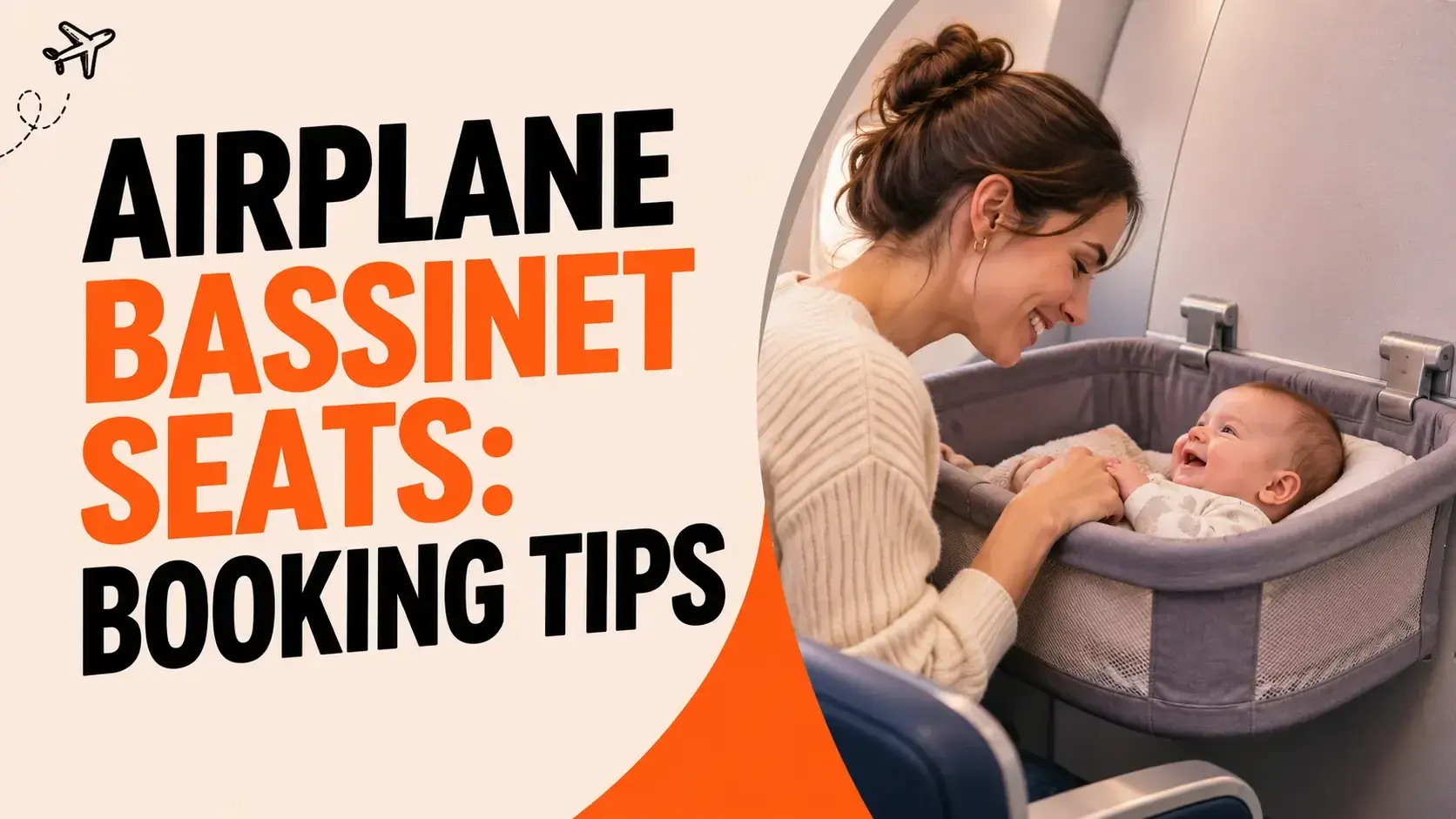

Bassinet Seats on Airplanes: Benefits, Rules, and Booking Tips
TL;DR
Bassinet seats can give your baby a designated resting space, but selecting one involves more than choosing a bulkhead row.
- Separate confirmations: A bassinet request, infant ticket, and advance seat assignment may require separate confirmation.
- Different limits: Every airline sets its own bassinet seat age limit, weight limit, and dimensions.
- Restricted use: Your baby must usually leave the bassinet during takeoff, landing, turbulence, or whenever the seat belt sign is illuminated.
- Seat tradeoffs: Fixed armrests, limited under-seat storage, galley noise, and cabin traffic can reduce adult comfort.
- Aircraft changes: An equipment change can remove the expected bassinet position or move your assigned seat.
Selecting seats while flying with an infant can feel unclear. Are bassinet seats good for sleeping? Does choosing a bulkhead bassinet seat guarantee a cot? What happens if the airline changes the aircraft?
Bassinet seats can make a long-haul flight with a baby easier, but policies and cabin layouts vary. In this guide, you will learn what bassinet seats are, where they are located, how to request one, and what to verify before departure.
What Is a Bassinet Seat?
A bassinet seat is an adult passenger seat beside a designated baby-bassinet position. The baby does not occupy the passenger seat unless you purchase a separate seat and use an approved child restraint.
The bassinet seat meaning becomes clearer when you separate its three components:
- Passenger seat: You sit in an airline bulkhead seat, usually while traveling with a lap infant.
- Attachment area: The aircraft bulkhead wall contains bassinet attachment points designed for compatible equipment.
- Infant bed: The airline installs a wall-mounted baby cot after departure when operating conditions permit.
An infant bassinet on a plane is different from an approved car seat. The airline supplies the bassinet, while an approved restraint occupies a purchased passenger seat. The FAA recommends an approved child restraint system as the safest place for a child during a flight.
Where Are Bassinet Seats Located on an Airplane?
Airplane bassinet seats are commonly found in bulkhead rows behind a cabin divider, galley, or lavatory area. The exact bassinet seat location depends on the aircraft type and cabin layout.
Check these layout details before making a bassinet seat reservation:
- Aircraft configuration: The same aircraft model can have several interiors, row numbers, and bassinet positions. Use aircraft seat maps to identify the scheduled layout.
- Cabin surroundings: A bassinet row on a plane may sit near lights, meal preparation, lavatories, or heavy foot traffic.
- Seat construction: Fixed armrests and a tray table in the armrest can reduce usable seat width. Compare likely dimensions with the seat-width comparison tool.
- Storage: Most bulkhead areas provide limited under-seat storage during takeoff and landing, so your carry-on baby supplies may need to remain overhead.
- Legroom: A bulkhead can create open knee space, but it is not automatically an extra-legroom row.
Are Bassinet Seats Good?
Bassinet seats are good when your eligible infant can rest in the cot for useful periods and you accept the bulkhead restrictions. They may be less suitable when adult seat width, quiet, or bag access is your priority.
What Are the Benefits of Bassinet Seats?
The main benefit is a separate place for your baby to rest during permitted parts of the flight. This can be especially useful during an overnight flight.
Potential benefits include:
- Infant rest: A baby cot on an airplane can support parts of your baby’s normal feeding and sleep schedule.
- Adult comfort: You may avoid holding your baby continuously when bassinet use is permitted.
- No reclining seat ahead: The bulkhead prevents another passenger from reclining directly into your space.
- Easier care: The front-facing cot position can make it easier to monitor your baby while seated.
What Are the Drawbacks of Bassinet Seats?
Your adult seat may have several compromises that are not clear on a basic airline seat map. The cot also remains subject to onboard restrictions.
Consider these limitations:
- Narrower seating: Fixed armrests may reduce hip room and prevent you from raising the armrest.
- Reduced storage: You may not have immediate access to bags during takeoff, landing, or restricted conditions.
- Noise and light: Nearby galleys, lavatories, and family seating areas can interrupt sleep.
- Interrupted use: Cabin crew may require you to remove your baby during turbulence or when the seat belt sign is on.
- Limited fit: An older or larger infant may exceed the airline’s permitted bassinet seat requirements.
What Rules Apply to Bassinet Seats?
There is no universal policy for bassinet seats. Your operating airline determines eligibility, placement, onboard use, and whether the service is available on your flight.
How Do Age, Weight, and Size Limits Differ?
You must check more than your baby’s age. The airline-specific bassinet policy may consider weight, height, physical development, and the equipment installed.
| Requirement | What You Should Confirm |
|---|---|
| Bassinet seat age limit | Maximum eligible age |
| Bassinet seat weight limit | Maximum permitted infant weight |
| Bassinet seat dimensions | Whether your baby fits within the cot |
| Cabin availability | Cabins and aircraft offering bassinets |
| Reservation priority | Whether requests are first come, first served |
Some carriers reserve designated places for passengers with infants. For example, Singapore Airlines states that bassinet seats in certain cabins are offered on a first-come-first-served basis. Always confirm the current policy for your operating flight.
When Can Your Infant Use the Bassinet?
Bassinet safety rules apply even after the cot has been installed. Cabin crew approval determines when your baby may remain inside it.
Expect restrictions covering:
- Takeoff and landing: Your baby cannot remain in the bassinet during these flight phases.
- Turbulence: You must remove your baby and follow crew instructions when conditions require it.
- Seat belt sign: Bassinet use may be suspended whenever the sign is illuminated.
- Permitted items: Pillows, blankets, toys, or sleep products may be restricted inside the cot.
- Adult responsibility: You must continue supervising your infant while the bassinet is in use.
How Do You Book Bassinet Seats?
Baby bassinet seat booking can involve three separate actions: adding an infant ticket, making a bassinet request, and selecting the associated passenger seat. Completing one does not necessarily complete the others.
How to Request and Confirm Bassinet Seats in 6 Steps
Follow this process before relying on bassinet seat availability:
- Book your infant correctly: Add your baby as a lap infant or purchase a separate seat, depending on your plan.
- Read the airline policy: Check infant age and weight restrictions, available cabins, fees, and approved onboard equipment.
- Review the layout: Use airline seat maps to locate the likely bassinet row.
- Contact the airline: Ask the operating airline reservation desk to record your bassinet request.
- Confirm both items: Verify the bassinet request and advance seat assignment separately, especially on a codeshare flight.
- Recheck before departure: Obtain check-in confirmation and ask whether final installation remains subject to cabin crew approval.
How Should You Choose a Bassinet Seat for Your Flight?
The best airplane seats with a baby depend on your infant, aircraft, cabin, and comfort priorities. Compare the seat itself before accepting the bassinet label.
Use this decision table:
| Priority | Check Before Selecting |
|---|---|
| Infant sleep | Galley lighting, lavatories and foot traffic |
| Adult comfort | Seat width, fixed armrests and bulkhead distance |
| Bag access | Overhead space and floor-storage restrictions |
| Family seating | Number of adjacent assignable seats |
| Easy movement | Aisle access with the bassinet installed |
| Flight certainty | Scheduled aircraft and alternate configurations |
After an equipment change, review the new live seat map, confirm that bassinet attachment points still exist, and check your reassigned seat.
How Can SeatInfo Help You Evaluate Bassinet Seats?
Airline maps may show a bassinet symbol without explaining seat width, nearby traffic, storage, or alternate configurations. SeatInfo helps you interpret those factors before choosing.
Where data is supported, you can:
- Review layouts: Examine airplane seat maps and identify bulkheads, galleys, lavatories, and cabin divisions.
- Compare configurations: Use the seat-map comparison tool when an airline operates multiple cabin versions.
- Assess comfort: Compare width, legroom, and seat characteristics that may affect an adult traveling with a baby.
- Recheck changes: Review your seat after an aircraft swap or updated assignment.
SeatInfo supports your seat decision. It does not supply bassinets, control airline assignments, or guarantee seat availability.
Conclusion: Should You Choose Bassinet Seats?
Bassinet seats can be useful when your baby meets the airline’s limits and the cot remains available. Your final choice should also account for noise, storage, seat width, and onboard restrictions.
Before departure:
- Confirm eligibility: Recheck your infant’s age, weight, and size against the operating airline’s policy.
- Verify both requests: Confirm the bassinet and your assigned seat separately.
- Review the aircraft: Check for a cabin or equipment change.
- Prepare an alternative: Plan for periods when your infant cannot use the bassinet.
Review your flight’s seat map with SeatInfo and compare the available bassinet seats before confirming your selection.
Frequently asked questions
Sometimes, but it depends on the aircraft layout and open seats. A bassinet position may have only one directly adjacent seat. Confirm every traveler’s assignment separately, because requesting the cot does not automatically place your entire party together.
Topics







See the cabin before you book it
Every blog here starts from a real seat map. Browse the catalog to scale, or run your own flight through the live tool.

Better seats, inyour inbox
Seat tips and newly mapped aircraft, one email a week.
Unsubscribe anytime. We never share your email.