Best Seat for Red-Eye Flights: A Practical Guide
Not sure where to sit on a red-eye flight? Compare the best seat for red-eye flights based on noise, light, recline, and sleep quality.
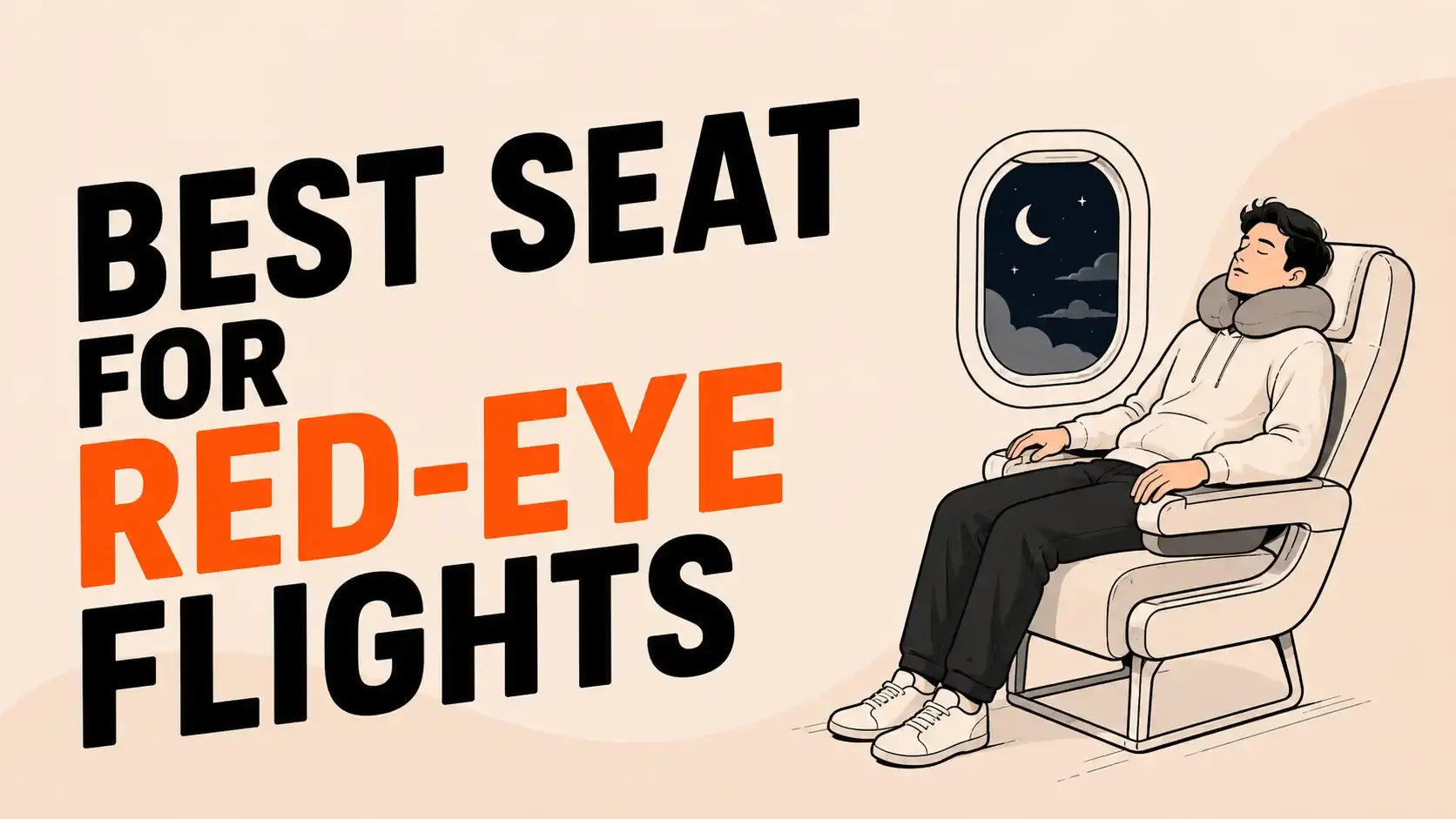

Best Seat for Red-Eye Flights: Where to Sit for Better Sleep
You booked a red-eye flight, and now you are staring at the seat map, unsure where to sit. Should you pick the window for privacy, or the aisle so you are not stuck climbing over someone at 3 a.m.? Picking the best seat for red-eye flights is not just about legroom; it is about light, noise, and how much control you have over your own sleep.
A few questions are worth asking before you choose. Will this seat keep cabin light and foot traffic away from you? Is it close enough to the galley or lavatory to disturb your sleep? Does the aircraft configuration on this specific flight actually match what the seat map shows?
In this guide, we will walk through how to evaluate the best airplane seat for red-eye flights by sleep quality, seat position, and traveler type, so you can make a more confident choice before you pay for a seat or check in.
TL;DR
- The best seat for a red-eye flight depends on your priority: uninterrupted sleep, aisle access, or avoiding cabin noise.
- Window seats generally support better sleep since they limit disturbance from other passengers and aisle traffic.
- Rows near galleys, lavatories, or exit doors tend to have more light and noise throughout the flight.
- Aircraft configuration can change between the time you book and the day you fly, so recheck your seat before departure.
- No single row works for everyone. Finding the best seat for red-eye flights means matching your seat choice to what actually helps you rest.
How Cabin Configuration Affects Your Red-Eye Seat Choice
Not every aircraft with the same model number has the same interior. Two planes flying the same route can have different galley positions, different exit rows, and different seat pitch, even if the seat map looks similar at first glance.
This matters more on a red-eye flight, where a few feet of distance from a galley or lavatory can be the difference between sleeping through the flight and waking up every hour. It is one reason the best seat for red-eye flights is not always the same row on every aircraft, even within the same airline.
Before choosing a seat, it helps to understand what can vary:
- Galley and lavatory placement: These can sit at the front, middle, or rear of the cabin depending on the aircraft variant.
- Seat pitch and recline: Some configurations offer more recline than others, even within the same cabin class.
- Exit row positioning: Exit rows may or may not exist where the seat map suggests, depending on the aircraft.
- Scheduled vs. actual aircraft: Airlines sometimes swap aircraft after you have already selected a seat.
If your flight shows a specific aircraft type, treat that as the scheduled configuration rather than a guarantee. It is worth checking again closer to departure, especially for long red-eye routes where aircraft swaps are more common.
Where to Sit on a Red-Eye Flight: Window, Middle, or Aisle
Each seat position offers a different tradeoff for sleep, privacy, and convenience. Understanding these trade-offs is the first step to figuring out where to sit on a red-eye flight based on what matters most to you.
Window Seat
A window seat gives you a wall to lean against and no one climbing over you to reach the aisle. This makes it a strong option for travelers whose main priority is uninterrupted sleep.
- Best for: sleep quality and minimizing disturbance.
- Watch for: some window seats have a misaligned or missing window due to cabin structure, which can be disappointing if you wanted to watch the view.
Middle Seat
The middle seat is rarely anyone's first choice, but on a red-eye it can work if you are traveling with a companion in the aisle or window seat. It offers little control over when you can get up.
- Best for: travelers seated with companions who do not mind limited mobility.
- Watch for: no personal space on either side, which can make sleep harder for solo travelers.
Aisle Seat
An aisle seat gives you the freedom to get up without disturbing anyone else. This matters if you tend to move around during long flights or have accessibility needs.
- Best for: travelers who prioritize mobility over uninterrupted sleep.
- Watch for: more disruption from other passengers and cabin crew passing by, along with carts during service.
Seats to Avoid on a Red-Eye Flight
Some seats create more disruption than others, regardless of window, middle, or aisle position. These issues are worth checking before you pay for a seat.
| Seat Location | Main Issue | Why It Disrupts Sleep |
|---|---|---|
| Near galley | Light and noise from crew activity | Crew work through the night on longer red-eyes |
| Near lavatory | Foot traffic and door noise | Passengers move throughout the flight, even overnight |
| Exit row | Restricted recline in some configurations | Limited recline makes sleep more difficult |
| Bulkhead | Fixed armrests and no under-seat storage | Less room to get comfortable during takeoff |
| Rear cabin | More engine noise on some aircraft | Constant noise can interrupt lighter sleepers |
If avoiding these areas is not possible, noise-canceling headphones and an eye mask can help offset some of the disruption.
Best Seat for Red-Eye Flights by Traveler Type
Seat choice for red-eye flights should match your travel priorities, not a single "best" row that works for everyone. Here is how the choice shifts depending on what you need most.
- Best for light sleepers: A window seat away from the galley and lavatory. However, window seats near the wing or over the wheel wells may carry more vibration and engine noise.
- Best for tall travelers: An exit row with extra legroom, where available. However, some exit rows restrict recline, which can work against sleep on an overnight flight.
- Best for families: Seats near a bulkhead with bassinet access, where offered. However, bulkhead rows often see more passenger and crew traffic during the flight.
- Best for aisle access needs: An aisle seat toward the front of the cabin. However, this position sees more foot traffic during meal service and deplaning.
What to Check Before You Pay for a Red-Eye Seat
A seat that looks ideal on the map can change before departure. A few checks can help you avoid paying for a seat that does not deliver what you expected, and get closer to the best seat for red-eye flights on your specific route.
- Confirm the aircraft type scheduled for your specific flight, not just the general fleet.
- Check whether the airline has more than one configuration for that aircraft model.
- Verify the seat's proximity to the galley, lavatory, or exit row.
- Recheck the seat map closer to departure in case of an aircraft swap.
- Compare a few seat options rather than relying on one row alone.
This is where comparing seat information across multiple sources becomes useful, especially when two seats look identical on the airline's map but differ in real passenger experience.
How SeatInfo Can Help You Choose a Red-Eye Seat
Airline seat maps show which seats are open, but they rarely explain why one red-eye seat sleeps better than another. Two seats can look the same on the map and still differ in noise, light exposure, or recline.
SeatInfo is built to fill in that gap. Rather than replacing the airline's booking system, it helps you interpret what a seat map does not show, so you can compare options before deciding where to sit.
Depending on the flight, SeatInfo can help with:
- Seat maps: Review cabin layouts and seat positions for your specific aircraft.
- Seat ratings: See recommended, caution, or avoid seats where this information is available.
- Aircraft-swap alerts: Track configuration changes that may affect your assigned seat, where supported.
Coverage and available data depend on the airline and route, so it is worth checking what information is available for your specific flight.
Conclusion
Choosing the best seat for red-eye flights comes down to a few factors: proximity to galleys and lavatories, recline availability, and whether the seat position matches your sleep habits. Aircraft configuration can also shift between booking and departure, so what looks like a great seat today is worth rechecking before you fly.
Comparing seat information ahead of time, rather than relying only on the airline's seat map, can make this decision easier. SeatInfo is designed to help travelers understand these trade-offs before committing to a seat, so you are not guessing based on a diagram alone.
Before your next overnight flight, take a few minutes to review your seat map and compare your options. A little preparation now can mean a more restful flight later.
FAQs
Q: Are window seats really better for red-eye flights?
For many travelers, yes. A window seat gives you a wall to lean against and removes the chance of someone climbing over you during the flight. That said, some window seats have limited recline or an obstructed view depending on the aircraft, so it helps to check the specific row before deciding.
Q: Can my seat assignment change after I book a red-eye flight?
Yes. Airlines sometimes swap aircraft due to maintenance or scheduling needs, which can change the cabin layout entirely. It is a good idea to recheck your seat map closer to departure, especially on longer or less frequently flown routes.
Q: Is it worth paying extra for a red-eye seat?
It depends on what the extra fee actually gets you. Paying for a seat with more legroom or better recline may be worth it if sleep quality matters to you. However, always verify what the seat offers instead of assuming the price reflects comfort.
Q: Do all planes have the same cabin layout for red-eye routes?
No. Even aircraft with the same model number can have different configurations depending on the airline and specific plane. This is why it helps to confirm the aircraft variant rather than relying on the general model type alone.
Q: Where should I sit on a red-eye flight if I want to avoid galley noise?
Look for seats several rows away from galleys, which are usually located near the front, middle, or rear of the cabin depending on the aircraft. Checking the specific seat map for your flight, rather than a general layout, gives a more accurate picture.
Topics
Keep reading
All blogs




See the cabin before you book it
Every blog here starts from a real seat map. Browse the catalog to scale, or run your own flight through the live tool.

Better seats, inyour inbox
Seat tips and newly mapped aircraft, one email a week.
Unsubscribe anytime. We never share your email.