Best Seat for Flight Anxiety: Best Place to Sit in 2026
The best seat for flight anxiety in 2026 is over the wing, where turbulence feels milder. Compare aisle and window options for a calmer flight.
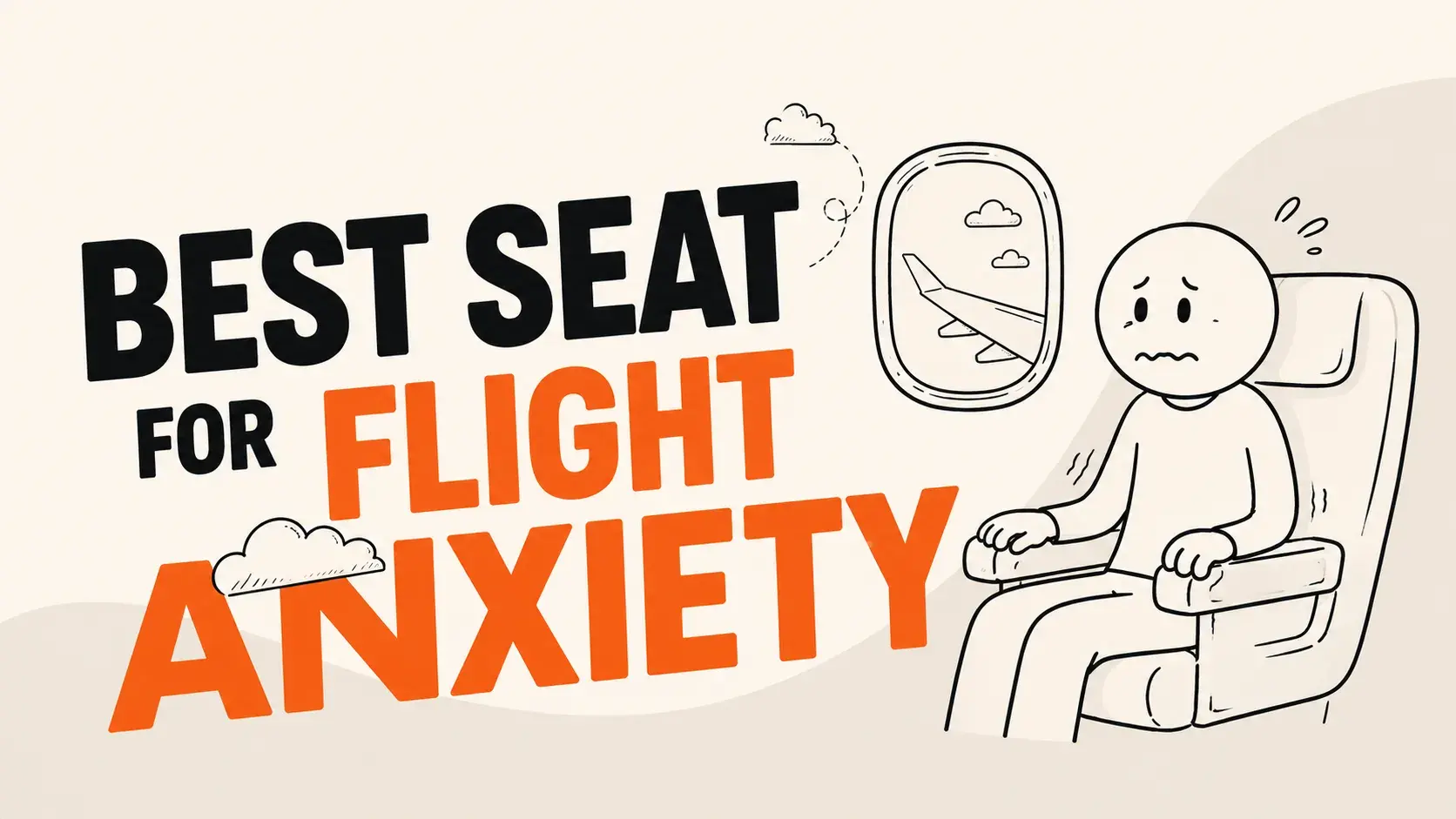

Best Seat for Flight Anxiety: Where to Sit on a Plane in 2026
Flight anxiety can make seat selection feel unusually important. A wing-area seat may suit turbulence concerns, while an aisle may feel better for confinement. The best seat for flight anxiety depends on your trigger, aircraft type, and cabin layout.
Start with the issue you want your seat to reduce:
- Movement: Prioritize the wing area without expecting a turbulence-free row.
- Confinement: Favor aisle access and enough personal space.
- Noise: Check restroom proximity, galleys, engines, and high-traffic rows.
- Motion sickness: Consider a window seat near the wing for lower perceived motion and an outside reference.
Key Takeaways
- Turbulence: The best seat for turbulence anxiety is usually around the wing, making these common seats with less turbulence sensation. Medical guidance also recommends wing-area seating when reducing motion sickness is the goal.
- Claustrophobia: An aisle seat can provide easier movement and more perceived control.
- Motion sickness: A window seat near the wing combines a window view with a smoother-feeling position.
- Configuration: Check the actual airplane seat map because wing position, exits, row numbers, seat pitch, and cabin features vary.
What Is the Best Seat for Flight Anxiety?
There is no universal best plane seat for anxiety. The safest-feeling seat on a plane is usually the one that improves perceived safety by reducing your main anxiety triggers without creating another problem.
Use this comparison for airplane seat selection:
| Seat option | Often suits | Main benefit | Possible drawback |
|---|---|---|---|
| Over or near the wing | Turbulence or motion concerns | Less perceived movement | Engine noise or limited ground view |
| Front cabin | Quick exit concerns | Faster deplaning | May cost more |
| Aisle seat | Claustrophobia or need to move | Easy aisle access | More passing traffic |
| Window seat | Motion sickness or outside reference | Window view and fewer interruptions | Harder to leave the row |
| Middle seat | Limited availability | May be cheaper or available | Less personal space and control |
For the best seats for nervous flyers, or the best seat for fear of flying, start with your trigger rather than a generic “best row.” The most comfortable airplane seat is not always the smoothest seat on an airplane or the easiest for aisle access.
Where Should You Sit for Flight Anxiety Based on Your Main Trigger?
Airplane seating for anxious passengers depends on the trigger. Flight anxiety, fear of flying, and aviophobia can involve turbulence, cabin noise, engine noise, nausea, vibration, or restricted movement.
Is the Best Airplane Seat for Flight Anxiety From Turbulence Over the Wing?
For a nervous flyer sensitive to aircraft movement, the best seat over the wing is a useful starting point. Medical guidance also recommends wing-area seating for motion sickness.
Consider these factors:
- Wing position: Choose a seat near the wings or around the front edge of the wing rather than assuming a row number.
- Motion: Seats farther from the aircraft center of gravity can make pitching movement more noticeable, although turbulence affects the entire aircraft.
- Tradeoff: A wing seat may reduce perceived movement but increase engine noise or limit the view.
- Expectation: There is no truly least turbulent seat on a plane.
Is an Aisle or Window Seat Better When Feeling Trapped Causes Anxiety?
The aisle vs window seat for anxiety decision depends on whether movement or an outside reference feels better, especially with claustrophobia, limited personal space, or loss of control.
Use your trigger to choose:
- Aisle seat: Better when movement, restroom access, or standing without asking a seatmate matters most.
- Window seat: Better when seeing the horizon, controlling the shade where permitted, or avoiding passing passengers feels calming.
- Middle seat: Usually less suitable if limited personal space is a major trigger.
- Claustrophobia: The best seat for claustrophobia on plane trips is often an aisle position, but seat width and row spacing still matter.
What Seat Choice Helps With Motion Sickness, Noise, or Quick Aisle Access?
Physical sensations can also drive anxiety. Match your seat to the main problem.
A practical seat choice flight anxiety checklist includes:
- Motion sickness: The best seat for motion sickness is often a motion sickness airplane seat near the wing. Mayo Clinic recommends the front edge of the wing, while MedlinePlus notes that wing seats may provide a smoother ride.
- Nausea: A window near the wing can provide an outside visual reference.
- Cabin noise: For the quietest seats on a plane, check galleys, lavatories, engines, high-traffic areas, and nearby flight attendant work areas.
- Quick exit: A seat near the front of the plane usually reduces the distance to the door during normal deplaning.
- Movement: Choose an aisle when easy access matters most.
Which Airplane Seats Can Make Flight Anxiety Feel Worse?
A seat is not automatically “bad.” When comparing front vs back of plane for anxiety, focus on whether the position amplifies your trigger.
Watch for these characteristics:
- Rear cabin: Avoiding rear airplane seats may help if you are sensitive to motion, cabin activity, or slower deplaning.
- Lavatory or galley proximity: Nearby seats may experience more foot traffic, light, conversation, and movement.
- Middle seat: Limited aisle access and personal space can make confinement feel stronger.
- Emergency exit row seats: Extra legroom can help, but eligibility, storage, or seat-design restrictions may apply.
- Bulkhead seats: Open knee space can help, but floor storage is generally unavailable during takeoff and landing, and fixed armrests may affect width. SeatInfo’s seat-map glossary also notes the takeoff and landing storage limitation for bulkhead rows.
- Restricted seat recline: Rows near exits or cabin walls can have limited recline, which matters for comfortable seats for long flights.
How Do Aircraft Type and Cabin Configuration Affect the Best Seat?
“Sit over the wing” only helps once you know where the wing falls. Boeing and Airbus aircraft, including the same model, can use different aircraft seating layouts. SeatInfo’s aircraft pages show that cabin configurations can differ by airline and aircraft version.
Before choosing a seat before a flight, check:
- Aircraft type: Confirm whether you are on a narrow-body aircraft or wide-body aircraft.
- Cabin layout: Find the wing, emergency exit, bulkhead, galleys, lavatories, and front and rear cabin boundaries.
- Seat measurements: Review seat pitch and legroom, seat width, and seat recline.
- Exact configuration: Use an airplane seat map and the seat map glossary to understand ratings and cabin terms.
- Physical fit: Use SeatInfo's legroom fit calculator or seat width comfort check when space contributes to anxiety.
- Aircraft swaps: Recheck your seat if the airline changes the aircraft because row numbers, wing position, exits, and seat characteristics may change. SeatInfo also advises passengers to confirm their seats after aircraft changes.
If your search is “where to sit flight anxiety,” identify your trigger first, then verify the exact seat against the scheduled aircraft.
How Can SeatInfo Help Anxious Flyers Compare Seat Options?
Airline maps may show availability without every tradeoff around space, windows, traffic, or cabin position. SeatInfo adds context so you can compare a specific flight instead of relying on a generic best place to sit on a plane.
For anxiety-focused seat selection, SeatInfo can help you:
- Review seat maps: Check seat positions, window alignment, galleys, lavatories, and exits.
- Compare characteristics: Look at legroom, width, recline, position, and seat ratings where available.
- Use seat tools: Open SeatInfo seat tools for legroom, width, seat scoring, and red-eye needs.
- Review availability: Check live seat availability where supported.
- Recheck configurations: Compare the cabin after an aircraft swap.
SeatInfo supports seat decisions but does not guarantee that a particular aircraft or seat will operate as scheduled.
What Is the Best Seat for Flight Anxiety in 2026?
For movement-sensitive travelers, a wing-area seat is a strong starting point for the best seat for flight anxiety. Your best airplane seat for flight anxiety may instead be an aisle, window, or front-cabin option.
Before confirming:
- Match the seat to your anxiety trigger.
- Consider turbulence and aircraft seating together rather than using one universal row.
- Review seat pitch, legroom, noise, recline, and nearby cabin features.
- Pair the seat choice with breathing exercises or calming techniques you already find useful.
- Recheck the configuration before departure.
Use SeatInfo to review your flight's cabin and compare available seats before making your final selection.
FAQs
1. Can an Airline Change My Selected Seat?
Yes. Airlines can change your selected seat because of aircraft swaps, operational requirements, equipment changes, or seating adjustments. Check your seat assignment again before departure, especially if the scheduled aircraft or cabin configuration changes after booking.
2. What Is the Best Seat for Flight Anxiety During Turbulence?
For turbulence-related anxiety, seats near the wings often feel steadier because they are closer to the aircraft’s center of lift. However, turbulence affects the entire aircraft, so no seat can guarantee a completely smooth ride.
3. Is an Aisle or Window Seat Better for Flight Anxiety?
An aisle seat is often better if feeling trapped or needing easy movement increases your anxiety. A window seat may suit you better if looking outside, seeing the horizon, or avoiding passing passengers helps you feel calmer.
4. Is an Exit-Row Seat Better for Nervous Flyers?
Not always. Exit-row seats may provide extra legroom, but they can include eligibility requirements, fixed armrests, limited storage, or additional responsibilities during an emergency. Choose one only if those conditions do not add to your anxiety.
5. Should You Recheck Your Seat After an Aircraft Swap?
Yes. An aircraft swap can change row positions, wing location, seat pitch, recline, nearby galleys, lavatories, or window alignment. Recheck the updated seat map to confirm that your assigned seat still matches your comfort priorities.
6. Is the Back of the Plane Bad for Flight Anxiety?
The rear cabin may feel less comfortable if you are sensitive to aircraft movement, noise, or slower deplaning. However, it is not automatically a poor choice. Your preferred seat should match the specific trigger behind your flight anxiety.
Topics
Keep reading
All blogs





See the cabin before you book it
Every blog here starts from a real seat map. Browse the catalog to scale, or run your own flight through the live tool.

Better seats, inyour inbox
Seat tips and newly mapped aircraft, one email a week.
Unsubscribe anytime. We never share your email.