Best Seat for Flying With a Toddler: 2026 Seating Guide
The best seat for flying with a toddler is usually a window seat near the lavatory. Compare bulkhead, aisle, and family-friendly options for 2026
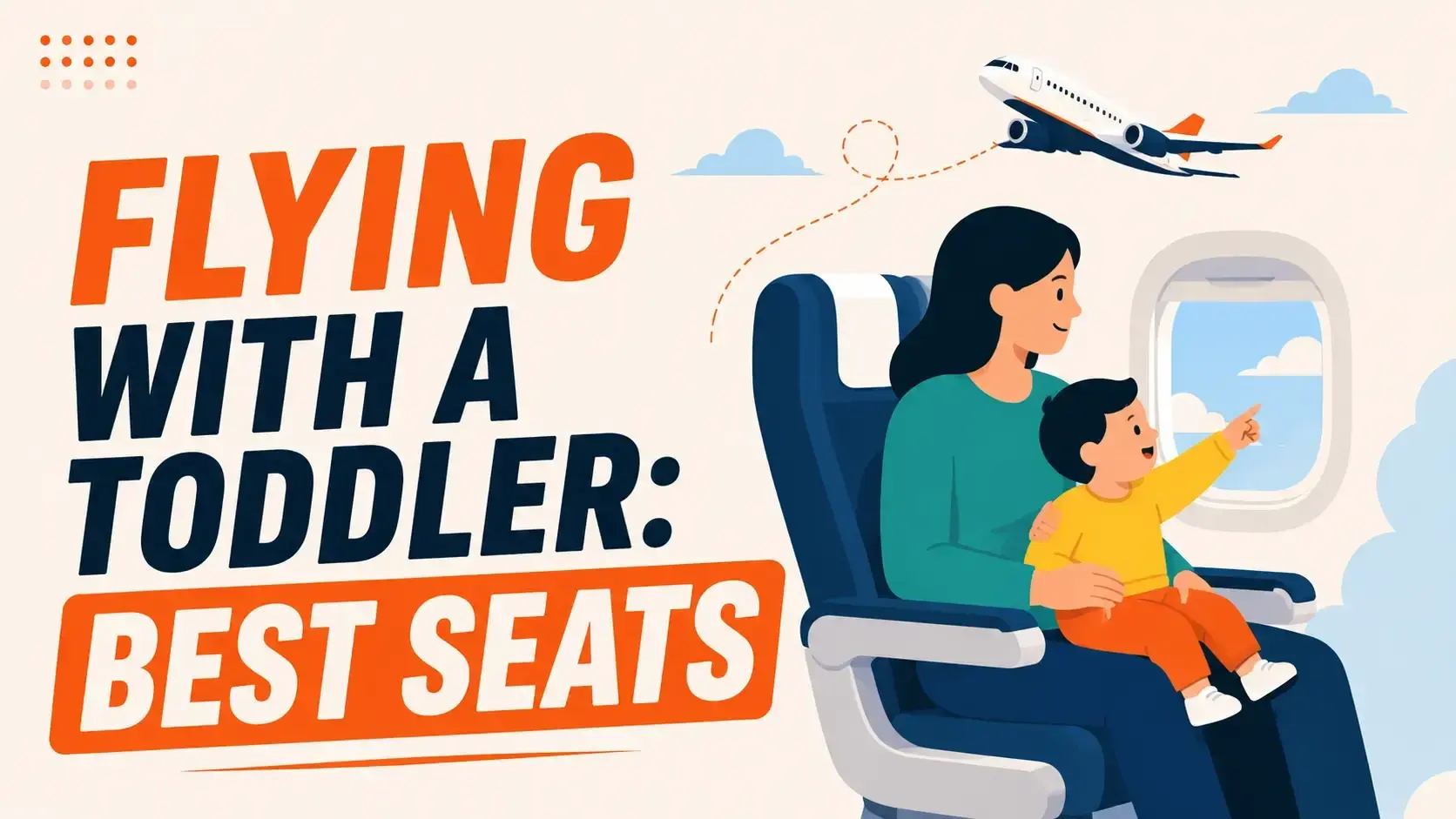

Choosing a seat becomes harder when you are traveling with a toddler. Is a window safer from aisle traffic? Should you sit close to the bathroom? Does a bulkhead give you useful space, or does losing under-seat storage make the trip harder?
The best seat for flying with a toddler is often a window seat for the child, with a parent beside them and a lavatory within reasonable walking distance. However, your child’s age, child restraint system, sleep needs, flight length, and aircraft cabin configuration can change that choice.
In this guide, you will learn where to sit flying with a toddler, which seat types have useful tradeoffs, and what to recheck before departure.
What Are the Key Takeaways?
The best seats on a plane with a toddler depend more on your family’s needs than on a single row number. Start with these priorities before comparing individual seats.
- Window for containment: A window seat with toddler seating can reduce exposure to carts and foot traffic, especially when a parent occupies the adjacent seat.
- Aisle for frequent movement: An aisle seat with toddler travel may work better when you expect repeated diaper changes, bathroom trips, or walks through the cabin.
- Sitting together first: Adjacent seats usually matter more than a small improvement in seat pitch, lavatory proximity, or seat recline.
- Check the exact aircraft: Use an aircraft seat map because the same aircraft model can have different cabin layouts.
- Recheck before departure: An aircraft swap or seat reassignment can change the advantages of your original seat choice.
What Is the Best Seat for Flying With a Toddler?
For many families, the best place to sit on a plane with a toddler is a window position for the child, with the accompanying adult beside them. Sitting several rows from a lavatory can also give you reasonable access without placing you directly beside queues and cabin noise.
The best flying with a toddler seat selection changes with your main priority:
| Priority | Seat Choice | Main Tradeoff |
|---|---|---|
| Keeping the toddler away from the aisle | Window seat beside parent | Harder to leave the row |
| Frequent bathroom trips | Parent on aisle | More carts and foot traffic |
| Toddler sleep | Quieter window area | May be farther from lavatory |
| More usable space | Standard extra-legroom row | Higher seat selection fee may apply |
| Sitting together | Adjacent standard seats | May require choosing a less desirable row |
The best airplane seat for flying with a toddler therefore depends on the actual seat map for your flight, not a universal row recommendation.
Is a Window or Aisle the Better Seat Choice Flying With a Toddler?
Window and aisle positions solve different problems. Your seat choice flying with a toddler should account for aisle access, window access, movement, sleep, and whether your child uses a restraint.
Window Seat With a Toddler
A window position is often a practical toddler airplane seat because your child is separated from direct aisle traffic. It can also provide a wall-side position for toddler sleep on a long-haul flight or overnight flight.
Consider these tradeoffs:
- Containment: Your toddler has one less direction to wander and stays farther from passing carts.
- Sleeping: The cabin wall can provide a more useful resting position, particularly when using the red-eye seat picker to compare sleep-related seat traits.
- Movement: You may need to ask another passenger to move if your family does not occupy the entire row.
- Child restraint: A window location is commonly preferred for a child safety seat because the restraint should not obstruct another passenger’s path, although airline-specific rules still apply.
Aisle Seat With a Toddler
An aisle position gives you faster access to the cabin when bathroom trips or movement matter more than isolation. It is usually more useful for the accompanying adult than for the toddler.
Keep these factors in mind:
- Aisle access: You can leave the row more easily for diaper changes or bathroom visits.
- Foot traffic: Your child is closer to passengers, service carts, and activity around galleys and lavatories.
- Movement: An active toddler may find the open aisle more tempting.
- Middle seat with toddler: If your family occupies all three seats, placing the toddler at the window and an adult on the aisle can give you both containment and easy access.
Are Bulkhead and Extra-Legroom Seats Better With a Toddler?
A bulkhead row or extra legroom seat can look like the best row for families on a plane, but more open space does not always mean fewer compromises. Storage, armrests, bassinets, and exit-row restrictions can matter more.
Bulkhead Seat With a Toddler
A bulkhead seat with toddler travel can give you open knee space because there is no standard seat directly ahead. However, the row often works differently from regular airplane seating with toddlers.
Check for:
- Storage: Many bulkhead positions have no under-seat storage during takeoff and landing, making overhead bin space more important.
- Armrests: Fixed armrests may contain tray tables and can reduce usable seat width.
- Bassinet position: Some airplane bassinet seats are located at bulkheads, which can increase family activity nearby. Toddler eligibility for bassinets varies by airline.
- Traffic: Galley proximity or lavatory proximity can mean additional cabin noise, lighting, and passengers waiting near your row.
Extra-Legroom Seats With a Toddler
An extra legroom seat with toddler travel can provide useful space, but first confirm whether it is simply an enhanced seat or part of an exit row.
Before paying more:
- Measure the benefit: Compare seat pitch using SeatInfo’s legroom fit calculator.
- Check width: Extra legroom does not necessarily mean extra seat width. The seat-width tool can help you compare available space.
- Avoid exit rows: U.S. rules prohibit children under 15 and passengers responsible for small children from occupying exit-row seats.
- Check the fee: Compare the added space against the seat selection fee before paying for an upgrade.
Should You Sit at the Front, Middle, or Back of the Plane With a Toddler?
The front or back of plane with toddler question has no universal answer. Cabin position changes bathroom access, noise exposure, deplaning time, and proximity to galleys.
Use this comparison before selecting a row:
| Cabin Area | Useful When | Main Limitation |
|---|---|---|
| Front | You have a short connection or want faster deplaning | Lavatories may be farther away |
| Middle | You want a balance between access and traffic | Experience depends heavily on cabin configuration |
| Rear | You want easier lavatory access on some aircraft | More queues, galley activity, and slower deplaning |
If you are considering seats near airplane bathroom facilities, several rows away may be more comfortable than the row directly beside the lavatory. Check lavatory and galley locations using SeatInfo’s seat-map glossary.
How Does a Toddler Car Seat Affect Where You Should Sit?
Using a toddler car seat on airplane travel can determine your seating options before comfort preferences enter the discussion. The FAA strongly urges parents of children under two to use an approved child restraint system rather than holding the child on their lap.
Before choosing the seat:
- Approval: Confirm that you are using an approved or FAA-approved car seat suitable for aircraft use and your child’s size.
- Placement: Check your airline’s child safety seat rules because placement can depend on evacuation access and aircraft configuration.
- Width: Compare the restraint dimensions against the available seat width, especially where fixed armrests reduce usable space.
- Exit rows: Review exit-row restrictions before selecting or paying for a seat.
- Orientation: Follow the restraint manufacturer’s instructions and your airline’s requirements rather than assuming every child seat installs the same way.
How Can Families Avoid Being Separated on the Aircraft?
Good family seating on airplanes starts with sitting together. A superior window or bulkhead position is rarely worth separating a toddler from the accompanying adult.
When choosing seats when flying with children, check:
- Family seating policy: Review the airline family seating rules before buying a particular fare.
- Same reservation: Keep the child and accompanying adults on the same booking where possible.
- Adjacent seats: Select adjoining seats early when the booking system permits it.
- Blocked seats: Do not assume every unavailable seat already contains a passenger because airlines may control inventory differently.
- Assignment changes: Recheck your seat assignment after schedule or equipment changes.
In the U.S., airline commitments to fee-free adjacent family seating still differ by carrier and include conditions.
What Should You Check on the Seat Map Before Choosing?
An airplane seat map for families can show much more than where three open seats appear together. Check the exact configuration before deciding between different plane seats for parents with toddlers.
Focus on these details:
- Cabin configuration: Confirm the aircraft version because different configurations can move exits, galleys, lavatories, and rows.
- Seat recline: Check seats near cabin boundaries where recline may be limited.
- Seat pitch: Compare the distance between seat rows when extra knee room matters.
- Seat width: Look for narrower positions caused by cabin design or fixed armrests.
- Lavatory proximity: Balance easier toilet access against noise, light, and queues.
- Galley proximity: Consider meal preparation, crew activity, lighting, and foot traffic.
- Bassinet position: Check whether bassinet locations create extra family activity around the row.
- Storage: Note bulkheads or other positions with limited under-seat storage.
- Seat rating: Use the SeatInfo seat score to compare legroom, width, recline, and proximity to galleys or lavatories.
What Happens to Your Seat Choice After an Aircraft Swap?
An aircraft swap can turn a carefully selected seat into a very different one. Row numbering, aisle position, seat width, nearby facilities, and even the existence of your original seat can change.
After an equipment change:
- Open the new map: Compare the new aircraft using SeatInfo aircraft seat maps.
- Check your position: Confirm window access, aisle access, lavatory location, and seat recline.
- Confirm the family: Make sure adjacent seats remain assigned together.
- Check the restraint: Verify that your child restraint system still works with the new seat.
- Review again: The scheduled aircraft may change again before departure, so check closer to travel.
SeatInfo notes that airlines can swap aircraft and recommends confirming your seat again at check-in.
How Can SeatInfo Help You Compare Seats When Flying With a Toddler?
Airline maps can show open seats without giving you all the context needed for airplane seating with toddlers. SeatInfo brings cabin and seat information together so you can compare the characteristics that matter to your family.
Depending on the flight and available data, you can use SeatInfo to:
- Review cabin layouts: Browse aircraft seat maps with rows, exits, galleys, lavatories, and cabin information.
- Check flight-specific seats: Use the live seat map to review current availability where supported.
- Compare comfort: Use SeatInfo tools for legroom, seat width, seat scores, and red-eye considerations.
- Interpret the map: Review seat-map terminology before comparing unfamiliar cabin layouts.
Seat availability and the scheduled aircraft can still change, so treat the map as decision support rather than a guarantee.
Conclusion: Choosing the Best Seat for Flying With a Toddler
The best seat for flying with a toddler is often a window seat for the child with a parent directly beside them, but your flight may call for a different choice. Bathroom needs, toddler sleep, child-restraint placement, cabin noise, storage, and flight length all affect the decision.
Before confirming your seat:
- Prioritize: Keep your family together before chasing small comfort advantages.
- Compare: Check the exact aircraft configuration rather than relying on the aircraft model alone.
- Recheck: Review family seating and seat characteristics after an aircraft swap or reassignment.
- Match the trip: A short-haul flight may favor quick aisle access, while a long-haul flight may make sleep and cabin traffic more important.
- Safety: Follow the airline’s rules for child restraints, exit rows, family boarding, and turbulence safety.
Review the seat map for your flight on SeatInfo before confirming your seat.
FAQs
These questions cover common details that can still affect your final seating decision.
1. Is a Window or Aisle Seat Better When Flying With a Toddler?
A window seat is often better for keeping a toddler away from aisle traffic, while an aisle position can make repeated trips out of the row easier.
Consider:
- Window: Better for containment, sleeping, and reducing direct contact with passing carts.
- Aisle: Better for frequent bathroom trips, diaper changes, and movement.
- Family row: If possible, place the toddler by the window with an adult next to them.
2. Is a Bulkhead the Best Seat for Flying With a Toddler?
Not always. A bulkhead can provide useful open space, but storage restrictions and fixed armrests can make it less convenient than expected.
Check:
- Storage: Under-seat storage may not be available.
- Bassinets: Some bulkheads contain airplane bassinet seats.
- Traffic: Nearby galleys or lavatories may increase activity.
- Configuration: Confirm the exact aircraft before choosing.
3. Should You Sit Near the Bathroom When Flying With a Toddler?
Being near a lavatory can help when bathroom visits or diaper changes are frequent, but sitting directly beside one can mean more noise and passenger traffic.
A useful compromise is to:
- Stay close: Choose a row within a short walk of the lavatory.
- Avoid queues: Skip the seats immediately beside the lavatory when quieter options exist.
- Check the map: Confirm the lavatory location on your actual aircraft configuration.
4. Can an Airline Change Seats After a Family Selects Them?
Yes. Your seat assignment can change because of an aircraft swap, operational requirements, schedule changes, or equipment substitutions.
If it happens:
- Check adjacent seats: Confirm that the toddler still sits beside an accompanying adult.
- Compare the new seat: Recheck width, recline, storage, and lavatory location.
- Review airline rules: Family seating policies and reassignment procedures vary by carrier.
5. Are Extra-Legroom Seats Worth Paying for When Flying With a Toddler?
Extra-legroom seats can be worth the fee if the additional space makes it easier to manage your child, belongings, or movement during a longer flight. However, not every extra-legroom row works well for families.
Check:
- Seat Type: Confirm that the seat is not in an exit row, which has passenger eligibility restrictions.
- Storage: Check whether bags can remain under the seat ahead or must go in the overhead bin.
- Seat Width: Fixed armrests can reduce usable width even when legroom is greater.
- Cost: Compare the added space with the seat selection fee and the length of your flight.
6. How Early Should You Choose Seats When Flying With a Toddler?
Choose seats as early as your airline and fare allow when sitting together is important. Early selection usually gives you more adjacent-seat options, but it does not guarantee that your assignments will remain unchanged.
Before departure:
- Select Together: Prioritize adjacent seats for the toddler and accompanying adult.
- Check Again: Review your assignments after schedule, aircraft, or booking changes.
- Watch Availability: Previously unavailable seats may open closer to departure.
- Confirm the Aircraft: Recheck the seat map before travel because an aircraft swap can change the cabin configuration.
Topics







See the cabin before you book it
Every blog here starts from a real seat map. Browse the catalog to scale, or run your own flight through the live tool.