Best Seat for Back Pain: Where to Sit on a Flight Guide
Struggling to find the best seat for back pain? Compare aisle, window, bulkhead, and exit row options to choose the right seat for your flight.
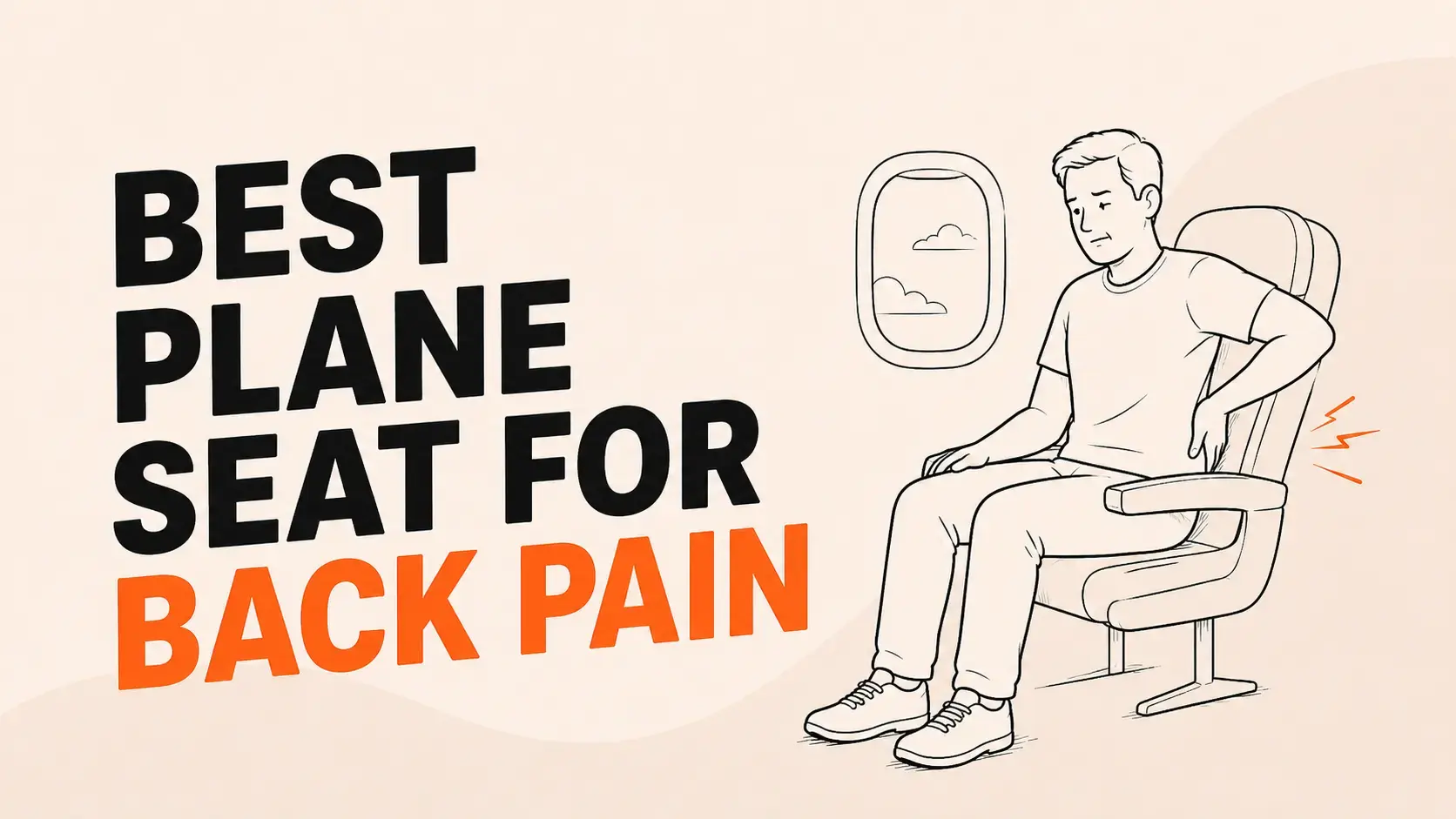

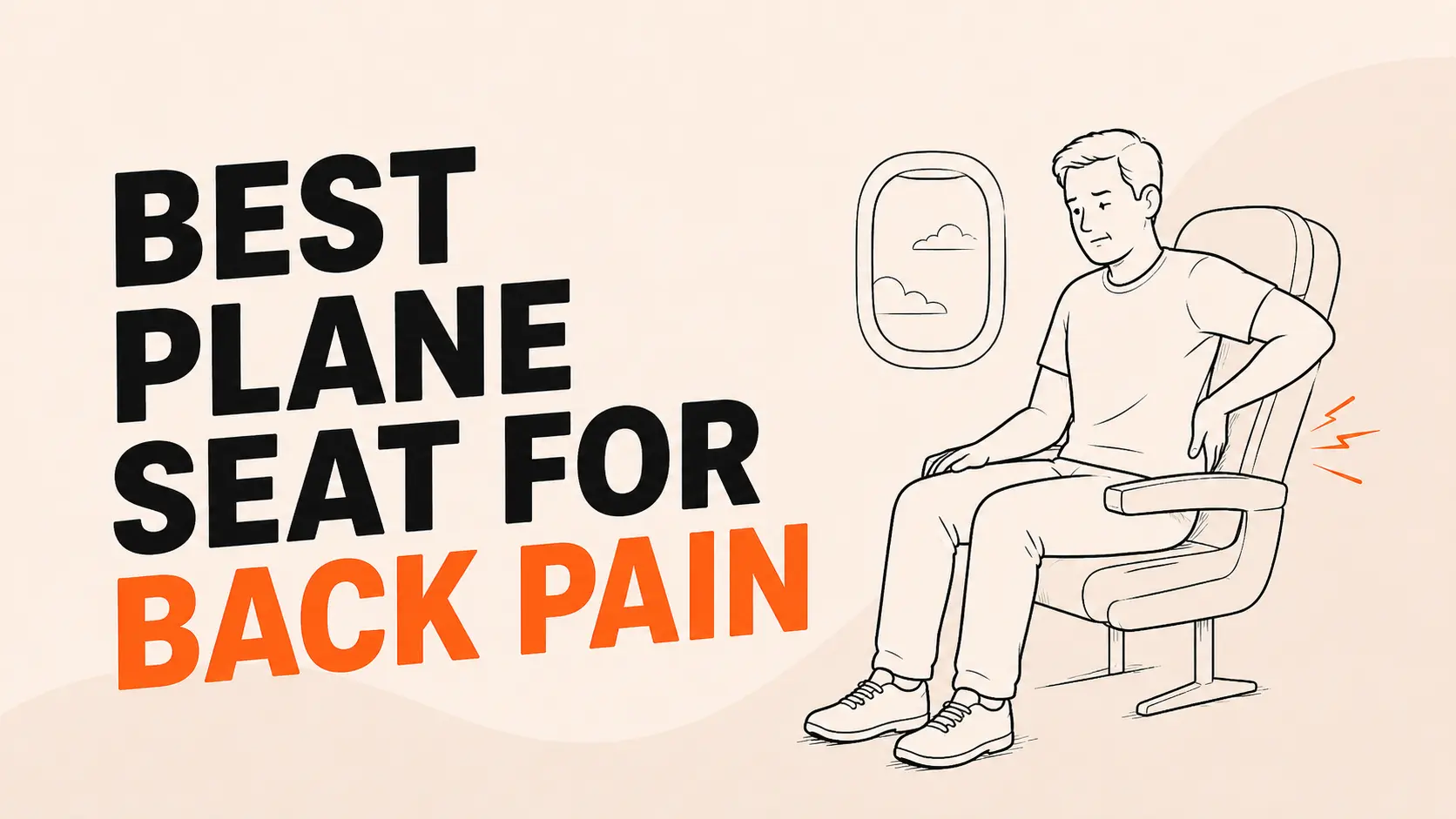
Best Airplane Seat for Back Pain: A Practical Guide to Choosing Wisely on Your Next Flight
You paid extra for a seat with more legroom, but two hours in, your lower back is already aching. Or maybe you picked a window seat without checking whether it reclines at all. Finding the best seat for back pain is not just about legroom. It is about recline, firmness, cabin position, and how easily you can shift or stand.
Is the exit row worth it if the seat barely reclines? Does a bulkhead seat give you more room or just a hard wall in front of your knees? These are the questions an airline seat map rarely answers.
In this guide, we will walk through what actually affects back pain in the air, which seats tend to work better for different travelers, and what to check before you pay for a seat upgrade.
TL;DR
- Seat pitch and recline matter more than seat class alone for lower back comfort
- Aisle seats generally make it easier to stand, stretch, and shift position
- Bulkhead and exit-row seats have tradeoffs that are not always visible on a seat map
- The same seat number can feel different depending on the aircraft configuration
- Always recheck your seat closer to departure, since aircraft swaps can change what you actually get
Why Choosing the Best Seat for Back Pain Matters
Long periods of sitting put pressure on the lower spine, and airplane seats often make this worse. This is exactly why the best seat for back pain looks different from one traveler to the next. Limited recline, thin padding, and narrow pitch can all increase discomfort on flights of any length.
There is no single seat that works for everyone with back pain. A seat that helps one traveler might frustrate another, depending on height, the type of back pain, and how long the flight is. The goal is not to find one universal answer. It is to understand which seat features matter for your situation.
Four factors affect back comfort the most:
| Factor | Why It Matters |
|---|---|
| Recline | Determines how much you can shift your lumbar angle |
| Pitch (legroom) | Affects how often you can change leg position |
| Firmness | Older or heavily used seats may offer less support |
| Aisle access | Determines how easily you can stand and stretch |
Aisle, Window, or Middle: Which Helps Back Pain More
Each seat position offers a different tradeoff. None is universally the best airplane seat for back pain, but each suits a different need.
Aisle seats
- Best for travelers who need to stand, stretch, or walk during the flight
- Easier to get up without disturbing others
- Limitation: less of a stable surface to lean against, and more foot traffic brushing past your shoulder
Window seats
- Best for travelers who want to lean against the cabin wall for lumbar support
- Fewer interruptions from people passing by
- Limitation: harder to get up, which can mean staying seated longer than is comfortable
Middle seats
- Rarely ideal for back pain
- No wall to lean on and no easy aisle access
- May still work for shorter flights if the traveler is seated between people they know and can move comfortably
If back pain is a concern, an aisle seat is usually the safer choice for shorter waits to standing, while a window seat can help if lumbar support against a wall matters more to you than mobility.
Where in the Cabin Should You Sit
Seat position within the cabin can matter as much as aisle, window, or middle. The same row type can behave differently depending on the aircraft and airline.
| Cabin Area | Main Advantage | Main Limitation | Best For |
|---|---|---|---|
| Bulkhead | No one reclining into your space | Fixed armrests, limited legroom to stretch, no under-seat storage during takeoff | Travelers who want to avoid a reclining seat ahead |
| Exit row | Extra legroom | Recline may be restricted, and eligibility rules apply | Taller travelers needing more leg space |
| Over-wing | Often more stable, less turbulence-related shifting | May have limited recline near the wing structure | Travelers sensitive to motion combined with back pain |
| Rear cabin | Seats may have more availability | More noise, more galley traffic, slower deplaning | Flexible travelers prioritizing legroom over quiet |
A seat that looks identical to another on the airline map may have different recline or storage rules depending on the aircraft version in use. This is one of the biggest gaps in typical seat maps, and it is worth checking before you pay for an upgrade. Keeping this in mind can save you from paying more for a seat that was never the best seat for back pain to begin with.
Seat Features That Affect Back Pain
Beyond position, a few specific features are worth checking before booking:
- Recline angle: Some seats near exits, bulkheads, or the last row have reduced or no recline
- Seat pitch: More pitch allows more room to shift position and stretch your legs
- Cushion age and firmness: Older cabin interiors may have thinner or more worn padding
- Armrest type: Fixed armrests near bulkheads and exit rows limit how much you can adjust your seating position
None of these details are guaranteed to be accurate on every seat map, since airlines update cabins over time. Where to sit for back pain often depends on confirming these specifics rather than assuming based on seat class.
Extra Steps to Protect Your Back Before and During the Flight
Seat choice is one part of the equation. A few habits can reduce strain regardless of where you sit:
- Bring a small lumbar cushion or rolled blanket for extra lower back support
- Stand and stretch every hour or two on longer flights; aisle seats make this easier
- Check in early if seat selection depends on availability at check-in
- Recheck your seat assignment closer to departure, since an aircraft swap can change your seat's characteristics even if the seat number stays the same
Aircraft swaps are common and can quietly turn a good seat choice into a poor one. If your aircraft changes, the new seat map may have a different configuration than what you originally selected.
How SeatInfo Can Help
Airline seat maps typically show which seats are available, but they rarely explain recline limits, cabin version, or whether a seat's features have changed since the last aircraft update. That gap makes seat choice for back pain harder to plan for, especially on unfamiliar routes.
SeatInfo is a seat decision-support platform that helps travelers understand what a standard seat map leaves out. It is not a booking site and does not control airline seat assignments.
Depending on the flight and airline, SeatInfo can help with:
- Seat maps: Review cabin layout and seat positions before choosing
- Seat comparison: Compare a few candidate seats side by side rather than guessing from a diagram
- Legroom tool: Check pitch and space where this information is available
Coverage and available data depend on the airline and route, so it is worth checking what information exists for your specific flight before relying on it.
Conclusion
Choosing the best seat for back pain depends on more than seat class or price. Recline, pitch, cabin position, and the specific aircraft configuration all play a role, and no single seat works for every traveler. An aisle seat may suit someone who needs to move often, while a window seat may suit someone who wants a wall to lean against. Whatever you choose, it is worth rechecking closer to departure in case the aircraft or configuration changes.
Understanding these tradeoffs ahead of time makes it easier to choose with more confidence instead of guessing from a seat map. SeatInfo can help by laying out seat and cabin details in one place, so you are comparing actual seat characteristics rather than assumptions.
If you want to see how these factors apply to your specific flight, review the seat map for your flight before you select or pay for a seat.
FAQs
Q: Are aisle seats always better for back pain?
Not always. There is no single best seat for back pain that works for everyone, but aisle seats make it easier to stand and stretch, which helps many travelers.
Q: Do bulkhead seats help with back pain?
Bulkhead seats remove the risk of someone reclining into your space, which some travelers with back pain prefer. That said, bulkhead seats often have fixed armrests and less room to stretch your legs, so they are not automatically the best choice.
Q: Can I request a specific seat for a medical reason?
Many airlines allow medical seating requests, but policies vary. It is best to contact the airline directly and confirm requirements ahead of time, since availability is not guaranteed even with a documented reason.
Q: Why does the same seat number feel different on different flights?
Airlines often operate more than one configuration of the same aircraft type. A seat number that offers good recline on one aircraft may have restricted recline on another version of the same model.
Q: Does paying for extra legroom guarantee better back support?
Extra legroom can help you shift position more often, but it does not guarantee better cushioning or recline. It is worth checking these details separately rather than assuming a higher price means more comfort.
Topics








See the cabin before you book it
Every blog here starts from a real seat map. Browse the catalog to scale, or run your own flight through the live tool.